
What's Happening?
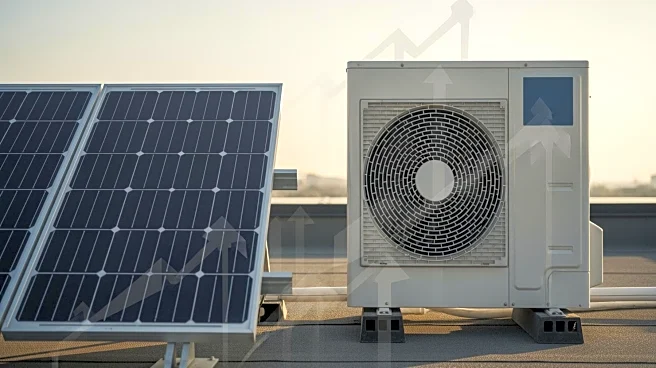
The expiration of federal tax credits for solar panels and heat pumps at the end of 2025 is expected to increase the cost of home electrification in the U.S. The 30% tax credit for solar and battery installations,
which previously allowed homeowners to reduce their tax bills, has ended. This change could extend the time it takes for energy savings to offset the cost of these systems. However, tax credits for leased solar systems remain until 2027, allowing some cost savings to be passed on to consumers. Additionally, tariffs and domestic manufacturing requirements may further raise costs. Despite these challenges, industry experts believe that the long-term financial benefits of solar installations will continue to attract homeowners.
Why It's Important?
The expiration of these tax credits could slow the adoption of renewable energy technologies in the U.S., impacting the country's efforts to transition to cleaner energy sources. Homeowners may face higher upfront costs, potentially delaying their investment in solar panels and heat pumps. This could affect the solar industry, which relies on these incentives to drive consumer demand. Additionally, the increased costs may disproportionately affect lower-income households, who may find it more challenging to afford these technologies without financial incentives. The situation underscores the importance of policy support in promoting renewable energy adoption.
What's Next?
As the industry adjusts to the loss of tax credits, new financing models, such as lease-to-own arrangements, may become more popular. These models allow homeowners to eventually own their solar systems while benefiting from initial cost savings. The solar industry may also focus on reducing 'soft costs' like permitting and paperwork to offset the impact of tariffs and manufacturing mandates. Homeowners are expected to continue investing in solar panels and heat pumps, driven by rising electricity rates and the need for energy independence. The industry will likely advocate for new policy measures to support renewable energy adoption.