
What's Happening?
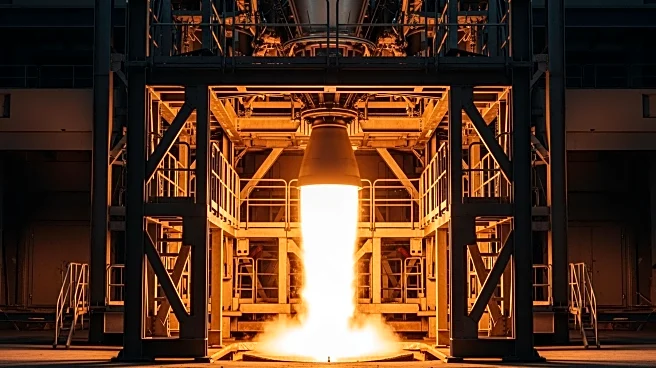
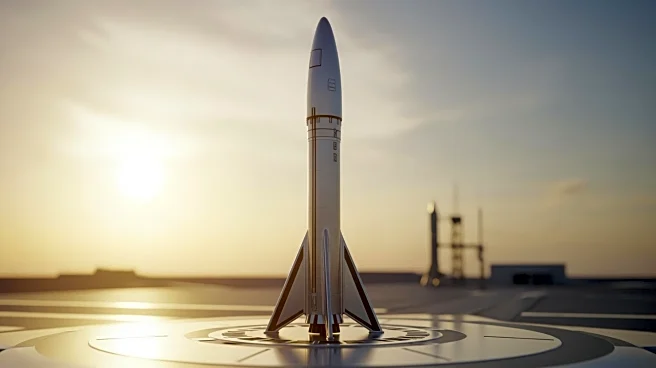
SpaceX has successfully conducted a static fire test of its next-generation 'V3' Starship, marking a significant milestone in its development. The test involved the 'Super Heavy' first stage, which briefly ignited its engines while anchored at Pad 2 at SpaceX's
Starbase site in South Texas. This was the first static fire for a V3 vehicle and the first test at Pad 2, which will enhance Starbase's launch capacity. The test is part of preparations for Starship's 12th test flight, scheduled for early to mid-April.
Why It's Important?
The successful test of the V3 Starship represents a critical step forward in SpaceX's mission to advance space exploration capabilities. The V3 iteration is designed to support missions to the moon and Mars, aligning with SpaceX's long-term goals of interplanetary travel. The increased power and capacity of the V3 Starship could revolutionize space logistics, enabling larger payloads and more ambitious missions. This development is significant for the aerospace industry, potentially influencing future collaborations, investments, and technological advancements.
What's Next?
SpaceX plans to conduct a full static fire test with all 33 Raptor engines installed on the V3 Starship. The upcoming test flight will be the first for a V3 vehicle, featuring Booster 19 and a Starship upper stage called Ship 39. Successful completion of these tests will pave the way for more advanced missions, including potential lunar and Martian expeditions. The aerospace community will be closely monitoring these developments, as they could set new benchmarks for space travel and exploration.