



What's Happening?
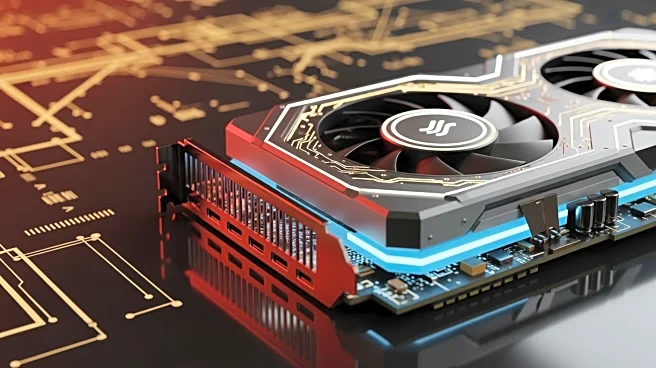
China's Lisuan G100 series GPUs, positioned as a domestic alternative to NVIDIA and AMD, have started shipping to customers. The initial shipments are aimed at professional workloads, particularly 'digital twin' applications. The Lisuan 7G106 model, part of this series, features 12 GB of GDDR6 memory, a 192-bit bus interface, and a maximum TDP of 225W. It is built on TSMC's N6 process and includes a self-built architecture and an in-house upscaler called NRSS. Mass production began in September 2025, with retail availability expected by Q1 2026. The GPUs are also noted for potentially supporting the 'Windows on ARM' initiative, which could enhance their appeal in the Chinese market.
Why It's Important?
The introduction of the Lisuan G100 GPUs marks a significant
development in the global GPU market, particularly as a domestic competitor to established brands like NVIDIA and AMD. This move could alter the competitive landscape, especially in China, where there is a growing demand for locally produced technology. The potential support for 'Windows on ARM' could further boost the adoption of these GPUs, given the increasing popularity of ARM CPUs in China. This development could lead to increased competition, potentially driving innovation and price adjustments in the GPU market.
What's Next?
As the Lisuan G100 GPUs begin to reach the consumer market, their performance and reception will be closely watched. If successful, these GPUs could encourage further investment in domestic technology development in China. The response from NVIDIA and AMD will also be critical, as they may need to adjust their strategies to maintain their market positions. Additionally, the broader implications for the global tech industry, including potential shifts in supply chains and market dynamics, will be significant.