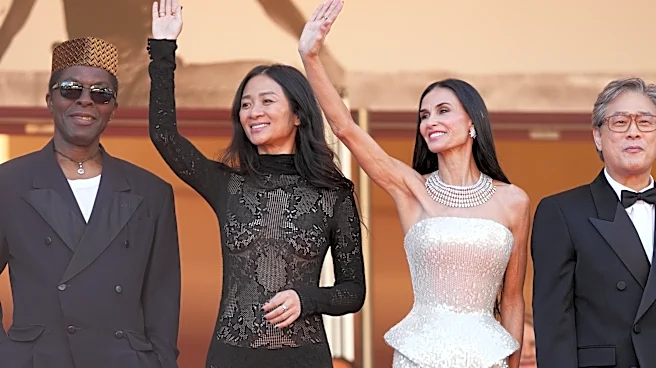








What's Happening?
Paul Laverty, a jury member at the Cannes Film Festival, criticized Hollywood for allegedly blacklisting actors like Susan Sarandon who have spoken out against the war in Gaza. Laverty's comments came during a press conference, where he expressed solidarity
with Sarandon and others who have faced professional repercussions for their political views. Sarandon, an Oscar-winning actress, revealed earlier this year that she lost her Hollywood agent after advocating for a ceasefire in Gaza. She noted the difficulty in securing roles in major films or television in the U.S., leading her to work more frequently in Europe. Laverty's remarks highlight the tension between political activism and professional opportunities in Hollywood, as well as the broader cultural and political implications of such blacklisting.
Why It's Important?
The issue of blacklisting in Hollywood raises significant questions about freedom of expression and the consequences of political activism within the entertainment industry. Laverty's comments bring attention to the potential career risks faced by actors who publicly express controversial political opinions. This situation underscores the ongoing debate about the role of artists in political discourse and the impact of their activism on their professional lives. The controversy also reflects broader societal divisions over issues like the conflict in Gaza, highlighting the challenges faced by those who advocate for peace and human rights. The discussion initiated by Laverty at Cannes may prompt further dialogue about the balance between artistic freedom and political expression in the entertainment industry.