
What's Happening?
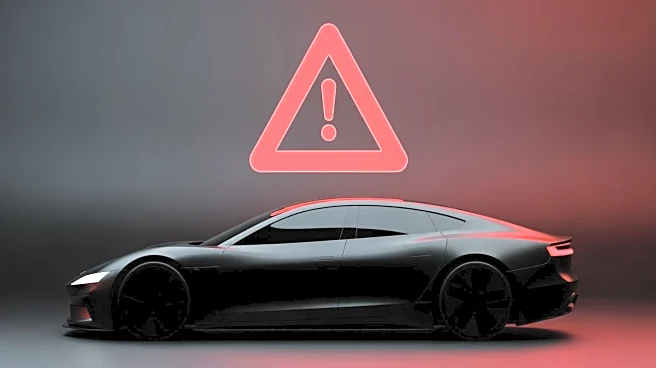
California regulators are considering a 30-day suspension of Tesla's license to sell cars in the state due to concerns over misleading marketing terms such as 'Autopilot' and 'Full Self-Driving.' A judge
has determined these terms could mislead consumers about the capabilities of Tesla's driver-assistance systems. Tesla has been given a window to modify its marketing to avoid the penalty. This development comes as Tesla is expanding its 'Robotaxi' service, which involves human 'AI operators' monitoring vehicles while the Full Self-Driving software is engaged. The California Public Utilities Commission reports that Tesla has 1,655 vehicles and 798 drivers registered for this service in the state.
Why It's Important?
The potential suspension of Tesla's sales license in California, its largest U.S. market, could significantly impact the company's operations and financial performance. The scrutiny over Tesla's marketing practices highlights ongoing regulatory challenges in the autonomous vehicle sector. This situation underscores the tension between Tesla's ambitious autonomy goals and regulatory compliance, which could affect investor confidence and stock performance. The outcome of this regulatory challenge could set a precedent for how autonomous vehicle technologies are marketed and regulated in the future.
What's Next?
Tesla must decide whether to comply with the regulatory demands or challenge the decision, which could lead to legal proceedings. The company's response will be closely watched by investors and industry stakeholders. Additionally, any changes in Tesla's marketing strategy could influence consumer perceptions and sales. The broader implications for the autonomous vehicle industry include potential changes in regulatory standards and marketing practices.