
What's Happening?
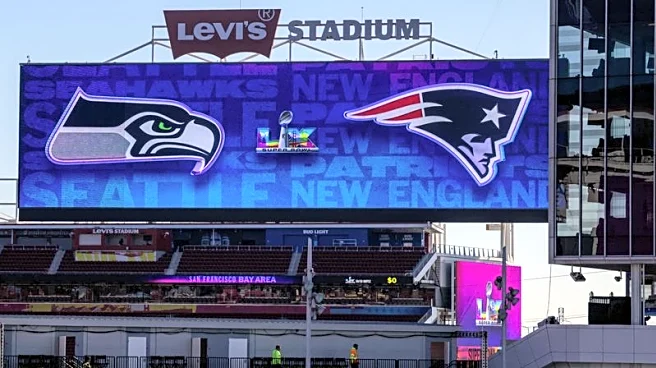
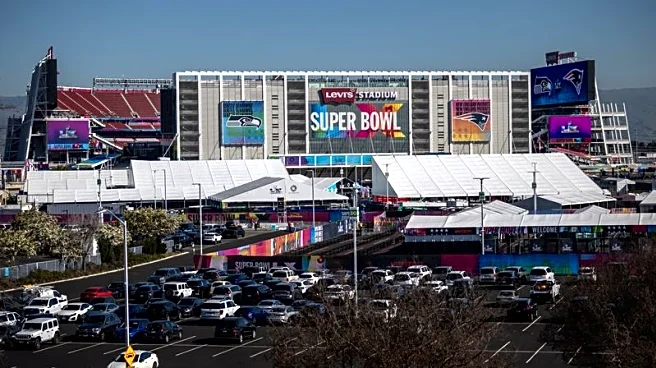
The Super Bowl 2026 featured a diverse array of commercials, with some ads standing out for their creativity and others falling flat. The game between the Seattle Seahawks and New England Patriots was
accompanied by a mix of pre-released and game-day ads. Notable trends included the use of celebrities in multiple commercials, humor that bordered on the gross, and a focus on artificial intelligence. Some ads, like those from Budweiser and Instacart, were praised for their creativity, while others, such as Bud Light's rolling keg ad, were criticized. The longer online versions of some ads were noted to be more effective than their broadcast counterparts.
Why It's Important?
Super Bowl commercials are a significant cultural event in the U.S., often reflecting broader advertising trends and consumer interests. The 2026 lineup highlights the increasing use of digital platforms to extend the reach and impact of ads beyond traditional TV broadcasts. The emphasis on AI and celebrity endorsements indicates ongoing trends in marketing strategies. The mixed reception of the ads underscores the challenges brands face in balancing creativity with commercial objectives. The effectiveness of longer online versions suggests a potential shift in how advertisers approach content creation and distribution.
What's Next?
As advertisers analyze the performance of their Super Bowl 2026 campaigns, there may be a shift towards creating more engaging and memorable content that leverages both traditional and digital platforms. The feedback from this year's ads could influence future strategies, with a possible increase in the use of extended online content. Brands may also explore new ways to integrate AI and celebrity endorsements to enhance viewer engagement. The evolving landscape of advertising will likely continue to shape how companies approach their Super Bowl campaigns in the coming years.