








What's Happening?
Ongoing supply chain disruptions, exacerbated by the Iran conflict, are leading to increased investment in sustainable food production, according to Ecovia Intelligence. The disruptions have caused significant price fluctuations, particularly in fertilizers,
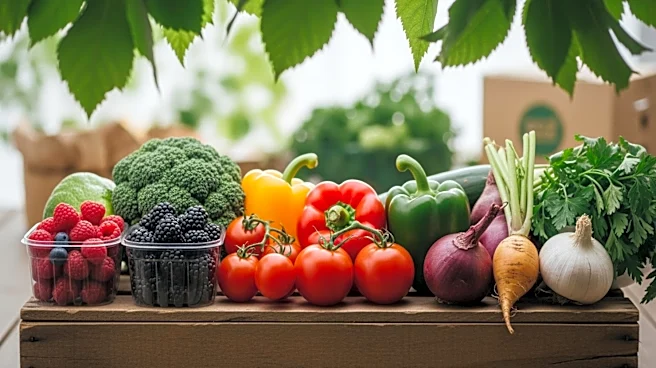
impacting European farmers who are now paying 50% more than a year ago. Organic farmers, less reliant on synthetic fertilizers, are somewhat shielded from these price hikes. The situation is prompting major food producers like Nestlé, Unilever, Danone, and Barilla to invest in regenerative agriculture to mitigate supply chain risks. This shift is expected to narrow the price gap between organic and conventional foods, as seen during the Ukraine war, which similarly affected fertilizer and energy costs.
Why It's Important?
The increased focus on sustainable food production is significant as it addresses both environmental and economic challenges. By investing in regenerative agriculture, companies aim to reduce dependency on volatile supply chains and enhance food security. This shift could lead to more resilient agricultural practices, benefiting both producers and consumers. As consumers increasingly value food provenance and traceability, the demand for sustainably produced food is likely to grow, potentially reshaping the food industry. This trend also supports local economies, as regional production becomes more emphasized.
What's Next?
As the situation evolves, food companies and retailers are expected to continue increasing their investments in sustainable production methods. This could lead to a broader adoption of regenerative agriculture practices, potentially influencing global food production standards. The ongoing geopolitical tensions and their impact on supply chains may further accelerate this trend, prompting more companies to reassess their supply chain strategies and invest in sustainability to ensure long-term viability.