






What's Happening?
Victory Metals, an Australian-listed mining company, has been approved as a member of the US Defense Industrial Base Consortium (DIBC). This membership grants the company direct access to the US defense procurement system, allowing it to engage with the US Department
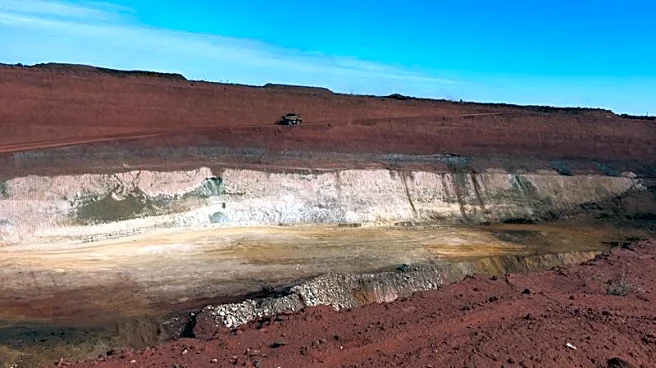
of Defense funding programs, prime contractors, and downstream processors focused on critical minerals. The DIBC is a public-private partnership aimed at enhancing the capacity and reliability of the US defense supply chain by identifying and developing new capabilities, addressing supply chain risks, and supporting the extraction and processing of key minerals crucial to US national security. Victory Metals' primary project, North Stanmore, contains a JORC-compliant resource estimated at 321 million tons, including rare earth elements and strategic minerals subject to export restrictions by China.
Why It's Important?
The inclusion of Victory Metals in the DIBC is significant as it aligns with the US's strategic goal of securing non-Chinese sources of heavy rare earths and strategic minerals. This move is part of a broader effort to reduce dependency on Chinese exports, which are critical for defense and technology sectors. By gaining access to US defense funding and partnerships, Victory Metals can accelerate its production pathway, potentially strengthening the US supply chain for critical minerals. This development could have far-reaching implications for US national security and economic stability, as it seeks to diversify its sources of essential materials.
What's Next?
Victory Metals plans to actively engage with DIBC members to pursue funding, offtake, and partnership opportunities. The company aims to leverage its membership to expedite the development of its North Stanmore project, which is expected to support operations for over 60 years. As the US continues to prioritize securing critical mineral supplies, further collaborations and investments in similar projects may be anticipated. The outcome of these efforts could influence global mineral supply dynamics and impact international trade relations, particularly with China.