



What's Happening?
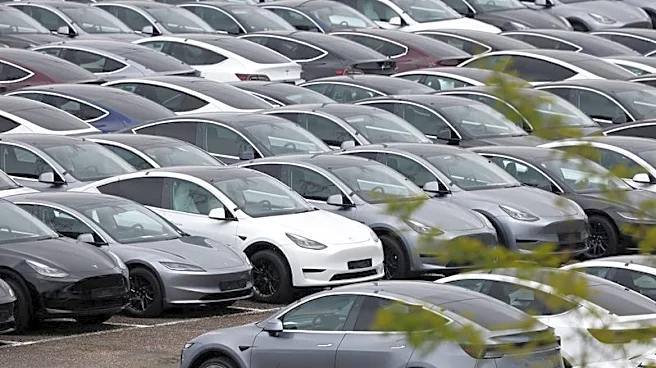
The market for used electric vehicles (EVs) is experiencing significant growth, with sales increasing by 27.7% in March compared to the previous year, according to Cox Automotive. This surge is attributed to a higher number of EVs returning to dealer
lots as leases end, providing consumers with more options. The average price for a used EV in March was $34,653, a decrease of 6.1% from the previous year, and only slightly higher than the average price of a used gas-powered car. Despite the removal of federal tax credits for EV purchases, state-level incentives remain available. However, owning an EV involves different costs, such as higher insurance premiums and potentially expensive battery replacements, which can range from $5,000 to $15,000.
Why It's Important?
The increase in used EV sales reflects a growing consumer interest in electric vehicles, driven by factors such as rising gas prices and environmental concerns. This trend could accelerate the transition to electric mobility in the U.S., impacting the automotive industry, energy consumption, and environmental policies. While the upfront cost of used EVs is becoming more competitive with gas-powered cars, the higher insurance and repair costs could affect consumer decisions. The availability of state incentives and the potential for lower long-term maintenance costs may encourage more consumers to consider EVs, influencing market dynamics and regulatory frameworks.
What's Next?
As more EVs enter the used car market, consumers will likely benefit from increased competition and potentially lower prices. The automotive industry may need to adapt by expanding service networks and developing more cost-effective repair solutions for EVs. Policymakers might also consider revising incentives to further promote EV adoption. Additionally, advancements in battery technology and charging infrastructure could play a crucial role in addressing consumer concerns about EV ownership costs and convenience.