





What's Happening?
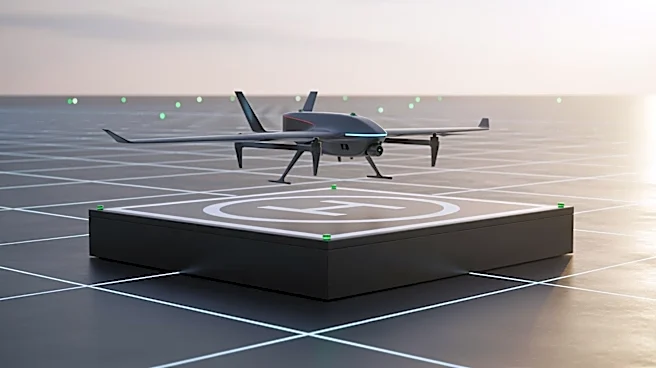
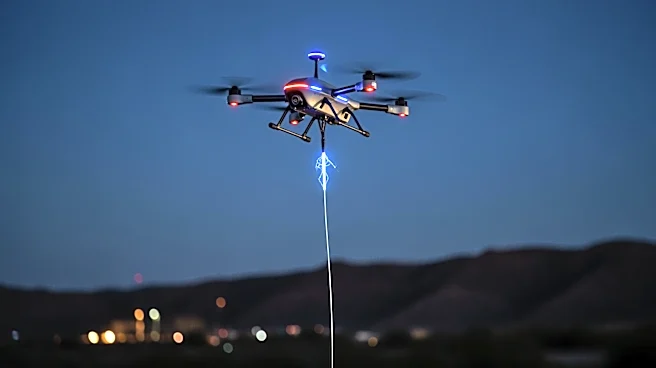
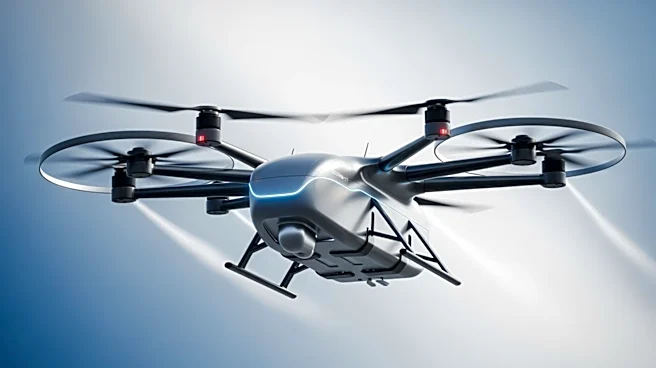
AIR has completed the first flight of its Production AIR Cargo-Heavy Lift UAS, a vertical take-off and landing (VTOL) platform designed for high-volume mass production. This unmanned aerial system (UAS) features next-generation motors, an advanced aircraft
battery system, and matured avionics, enabling it to perform repeatable missions with reduced human intervention. Developed over two years through hundreds of flights and direct customer feedback, the aircraft is designed to operate consistently in challenging conditions such as dust and darkness. The UAS is categorized as a Group 4 UAS by the U.S. Department of Defense, making it suitable for high-demand military logistics as well as commercial and humanitarian applications. Over 25 units have already been ordered, indicating strong market demand.
Why It's Important?
The successful flight of AIR's heavy-lift UAS represents a significant advancement in unmanned logistics, offering a versatile solution for both military and civilian applications. Its dual-use architecture allows it to address defense needs in contested or infrastructure-limited environments, while also supporting commercial operations such as mid-mile delivery and maritime resupply. The platform's ability to perform in adverse conditions enhances its utility in rapid aid deployment in remote areas, potentially transforming logistics in various sectors. The strong market demand, evidenced by the pre-orders, underscores the growing reliance on autonomous systems to improve efficiency and reduce operational costs.
What's Next?
Following the successful flight, AIR is likely to focus on scaling production to meet the existing demand and explore further applications of the UAS in different sectors. The company may also engage with additional military and commercial clients to expand its market presence. As the platform gains traction, regulatory considerations and partnerships with logistics companies could shape its deployment strategy. Continued innovation in autonomy and battery technology will be crucial to maintaining competitive advantage and addressing evolving operational challenges.
Beyond the Headlines
The development of AIR's heavy-lift UAS highlights the broader trend towards automation in logistics, which could lead to significant shifts in labor markets and operational practices. The platform's ability to operate with minimal human intervention raises questions about the future role of human operators in logistics and the potential for job displacement. Additionally, the dual-use nature of the UAS underscores the increasing overlap between military and civilian technologies, prompting discussions on ethical considerations and regulatory frameworks to govern their use.