






What's Happening?
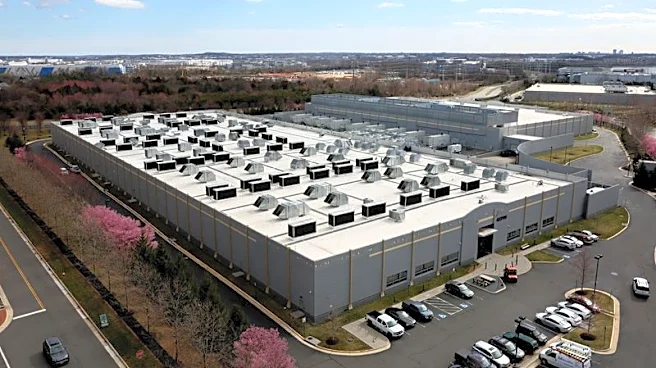
Amazon, Microsoft, and Alphabet's Google are facing increased scrutiny from shareholders regarding the environmental impact of their data centers. These tech giants have recently halted the construction of several multibillion-dollar data centers due
to community opposition. Shareholders are now demanding more transparency on the companies' water usage and conservation efforts, especially as they expand their computing capabilities. Trillium Asset Management, a Boston-based firm, has filed a resolution with Alphabet seeking clarity on how it plans to meet its climate goals amidst rising energy demands. Despite pledges to reduce emissions, Alphabet's emissions have reportedly increased by 51%. Similar concerns are being raised with Nvidia, as shareholders seek to ensure that short-term gains in artificial intelligence do not compromise long-term climate and financial stability.
Why It's Important?
The pressure from shareholders highlights the growing concern over the environmental sustainability of large tech companies. Data centers are significant consumers of water and energy, and their environmental impact is becoming a critical issue for investors and communities alike. The demand for transparency and accountability in water usage and emissions is crucial as these companies continue to expand. The outcome of these shareholder resolutions could influence corporate policies and practices, potentially leading to more sustainable operations. This situation underscores the broader trend of investors prioritizing environmental, social, and governance (ESG) factors in their investment decisions, which could have significant implications for the tech industry and its approach to sustainability.
What's Next?
As annual shareholder meetings approach, it is expected that these resolutions will be a focal point of discussion. Companies like Amazon, Microsoft, and Google may need to provide more detailed disclosures on their environmental impact and outline concrete steps to mitigate it. The tech giants might also face increased pressure to adopt more sustainable practices, such as closed-loop cooling systems that reduce water usage. The response from these companies could set a precedent for how the tech industry addresses environmental concerns, potentially leading to industry-wide changes in sustainability practices.