


What's Happening?
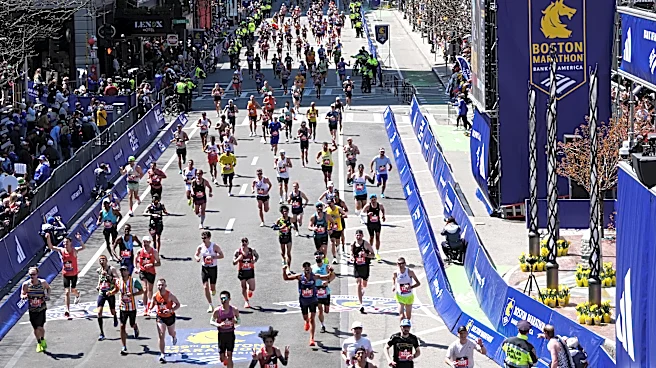
The 130th Boston Marathon commenced with military marchers and wheelchair racers leading the event from Hopkinton. Despite temperatures in the 30s, the cold weather is expected to contribute to record-breaking times for the fastest field in the marathon's
history. The event features notable athletes, including Sharon Lokedi and John Korir, who are returning to defend their titles. The marathon also marks the 50th anniversary of the 'Run for the Hoses,' a race historically remembered for its extreme heat. This year, a tailwind is anticipated to aid runners as they make their way to Boston's Back Bay. The race has implemented changes to reduce bottlenecks, including consulting a crowd scientist and unveiling a new statue honoring marathon pioneer Bobbi Gibb.
Why It's Important?
The Boston Marathon is a significant event in the sports calendar, drawing participants and spectators from around the world. The race not only showcases athletic excellence but also serves as a symbol of resilience and community spirit. The participation of military marchers highlights the event's inclusivity and the diverse backgrounds of its participants. The cold weather conditions present unique challenges and opportunities for athletes, potentially leading to new records. The marathon's efforts to address crowd management reflect ongoing adaptations to enhance the experience for participants and spectators alike.
What's Next?
As the marathon progresses, attention will focus on the performance of top athletes and the potential for record-breaking times. The event's organizers will continue to monitor and address logistical challenges, such as managing discarded clothing due to the cold start. The outcome of this year's race may influence future strategies for managing large-scale sporting events, particularly in terms of crowd control and participant safety. The unveiling of the Bobbi Gibb statue may also inspire further recognition of women's contributions to the sport.