





What's Happening?
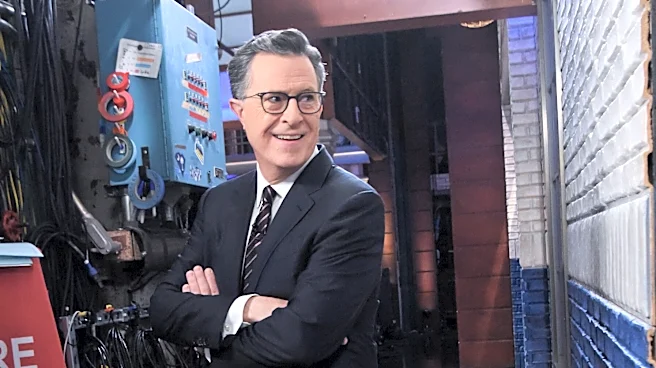
Stephen Colbert's 'The Late Show' concluded its 11-year run with a final episode featuring numerous celebrity appearances and a unique sci-fi twist. The episode included cameos from stars like Bryan Cranston, Paul Rudd, and Paul McCartney, who performed
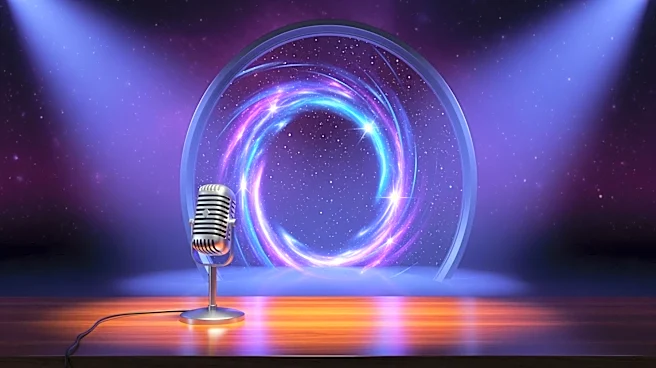
a rendition of 'Hello, Goodbye.' The show ended with a fictional interdimensional wormhole consuming the Ed Sullivan Theater, symbolizing the show's end. Colbert's farewell was marked by humor and gratitude, as he reflected on his tenure and the show's impact. The finale avoided political commentary, focusing instead on celebration and entertainment.
Why It's Important?
The conclusion of 'The Late Show' marks the end of an era in late-night television, highlighting shifts in media consumption and entertainment. Colbert's departure reflects broader industry trends, including changes in network strategies and audience preferences. The show's end also underscores the evolving landscape of late-night TV, where traditional formats are increasingly challenged by digital platforms and new content delivery methods. Colbert's legacy as a host who blended humor with social commentary remains influential, shaping the future of late-night programming and its role in cultural discourse.
What's Next?
Following the show's conclusion, Colbert plans to co-write a new 'Lord of the Rings' film with his son, indicating a shift towards new creative projects. The 'Late Show' time slot will be filled by Byron Allen's 'Comics Unleashed,' reflecting CBS's strategic programming decisions. The transition highlights ongoing changes in the television industry, as networks adapt to new viewer demands and competitive pressures. Colbert's future endeavors may continue to influence media and entertainment, as he explores opportunities beyond late-night television.