
What's Happening?
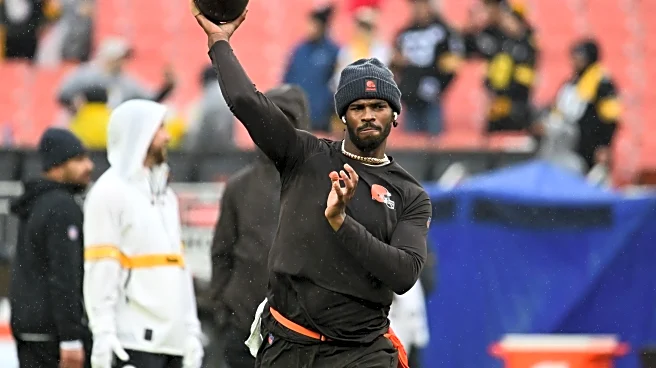
The Cleveland Browns have decided not to finalize a contract with defensive end A.J. Epenesa after he failed to pass a physical examination. Earlier this month, the Browns had agreed to terms with Epenesa on a one-year deal worth up to $5 million. However,
the team cited concerns from his physical as the reason for not proceeding with the contract. This decision mirrors similar actions taken by other NFL teams in the past, such as the Baltimore Ravens with defensive end Maxx Crosby. Epenesa, who was a 2020 second-round pick by the Buffalo Bills, has played in 91 regular-season games, starting 19 of them, and has accumulated 24 career sacks over six seasons with the Bills.
Why It's Important?
This development is significant as it highlights the critical role that physical examinations play in the NFL's contract negotiations. The Browns' decision not to sign Epenesa underscores the importance of player health and fitness in professional sports, where teams invest heavily in athletes. For Epenesa, this means returning to the open market, potentially affecting his career trajectory and financial prospects. For the Browns, it reflects a cautious approach to player acquisitions, prioritizing long-term team health and performance over immediate roster additions. This decision could influence other teams' strategies in handling similar situations, emphasizing the need for thorough medical evaluations.
What's Next?
A.J. Epenesa will now return to the open market, seeking opportunities with other NFL teams that may be willing to overlook the concerns raised by the Browns' medical evaluation. Teams interested in Epenesa will likely conduct their own assessments to determine his fitness for play. Meanwhile, the Browns may continue to explore other options to strengthen their defensive lineup. This situation could prompt discussions within the league about the standards and transparency of physical evaluations, potentially leading to changes in how these assessments are conducted and communicated.