








What's Happening?
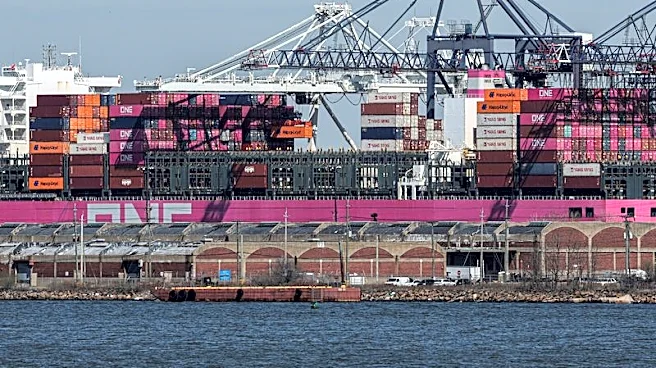
Descartes Systems Group's latest report indicates a 3.2% decrease in U.S. container import volumes in April 2026 compared to March, totaling 2,277,965 twenty-foot equivalent units (TEUs). Imports from China saw a significant drop, both month-over-month
and year-over-year. The report highlights that West Coast ports have regained market share over East and Gulf Coast ports, with improved port transit delays. The ongoing geopolitical tensions in the Middle East and fluctuating U.S. trade policies, including Section 122 tariffs, continue to impact the maritime shipping landscape. Despite these challenges, U.S. maritime import volumes have shown resilience, maintaining levels above pre-pandemic figures.
Why It's Important?
The decline in import volumes underscores the impact of geopolitical tensions and trade policy uncertainties on the U.S. economy. The shift in port market share and improved transit times suggest adjustments in logistics strategies to cope with these challenges. The persistent volatility in global supply chains necessitates greater flexibility and cost control for U.S. importers. The situation also highlights the importance of diversified sourcing strategies to mitigate risks associated with geopolitical disruptions and tariff uncertainties.
What's Next?
As geopolitical tensions and trade policy uncertainties persist, U.S. importers may continue to adapt their strategies to ensure supply chain resilience. The focus on flexibility and cost control will likely drive further diversification of sourcing strategies. The upcoming tariff refunds and potential policy extensions will be closely monitored by stakeholders, as they could influence future trade dynamics. The ongoing situation in the Middle East will remain a critical factor affecting global maritime shipping routes and U.S. import volumes.