






What's Happening?
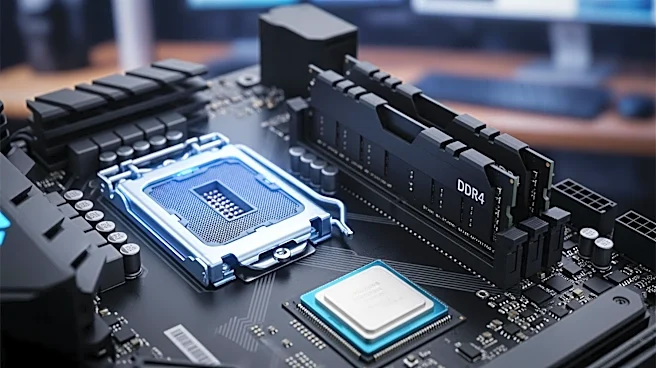
AMD has decided to bring back the Ryzen 7 5800X3D processor to cater to the DIY market, which still has a significant number of AM4 motherboards and DDR4-supporting machines. David McAfee, Vice President of Ryzen and Radeon at AMD, explained that this
decision was driven by the demand from users who are still gaming on older processors like the Ryzen 5 2600X or 3700X. The reintroduction of the 5800X3D is expected to provide a substantial performance boost for these users. The process involved re-engineering the chip to migrate from the old manufacturing process to a newer one, as the original method of stacking the 3D V-Cache on the CPU die was no longer in use. This move comes at a time when major DRAM vendors are transitioning from DDR4 to DDR5, posing challenges in ensuring sufficient DDR4 memory supply for the market.
Why It's Important?
The reintroduction of the Ryzen 7 5800X3D is significant for the DIY community, which relies on affordable upgrades to enhance gaming performance without overhauling entire systems. This decision reflects AMD's commitment to supporting its user base by providing solutions that align with current market demands. As DDR4 memory production winds down, AMD's move ensures that users can continue to upgrade their systems without being forced into the newer DDR5 ecosystem prematurely. This strategy could strengthen AMD's position in the DIY market, fostering customer loyalty and potentially boosting sales in a segment that values performance and cost-effectiveness.
What's Next?
AMD's decision to reintroduce the Ryzen 7 5800X3D may prompt other manufacturers to consider similar strategies to support legacy systems. As DDR5 becomes more prevalent, AMD will likely focus on transitioning its product line to accommodate newer technologies while maintaining support for existing users. The company may also explore partnerships with memory suppliers to ensure a steady supply of DDR4 for its products. Additionally, AMD's engagement with the DIY community could lead to further product innovations based on user feedback, potentially influencing future developments in the processor market.