
What's Happening?
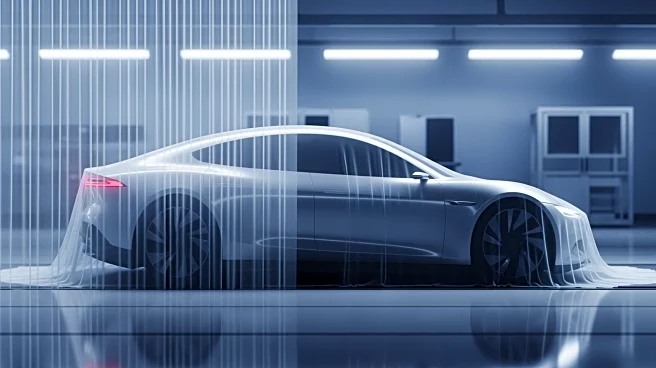
Tesla, under the leadership of Elon Musk, is undergoing a strategic rebranding, focusing on expanding its identity beyond electric vehicles (EVs) to include AI and robotics. Despite this, Tesla's financial reality remains heavily reliant on EV sales, which have recently declined. In response, Tesla plans to end production of the Model S and Model X, which constitute a small portion of its sales. The company aims to fill this gap with new initiatives, including the production of Optimus humanoid robots and expanding its robotaxi operations.
Why It's Important?
Tesla's decision to end the production of the Model S and X marks a significant shift in its business strategy, reflecting the challenges of maintaining profitability amidst declining EV sales. This move highlights
the company's efforts to diversify its revenue streams and reduce its dependence on vehicle sales. By investing in AI and robotics, Tesla is positioning itself to compete in emerging technology markets, which could offer new growth opportunities. However, this transition also involves substantial financial risks, as indicated by the planned increase in capital expenditures.
What's Next?
Tesla's future plans include scaling its robotaxi operations and potentially merging with other Musk-led companies like SpaceX and xAI. These initiatives could redefine Tesla's business model and influence the broader automotive and technology industries. The company's ability to successfully execute these plans will be crucial in determining its long-term viability and market position. Stakeholders will be closely monitoring Tesla's financial performance and strategic decisions in the coming years.