








What's Happening?
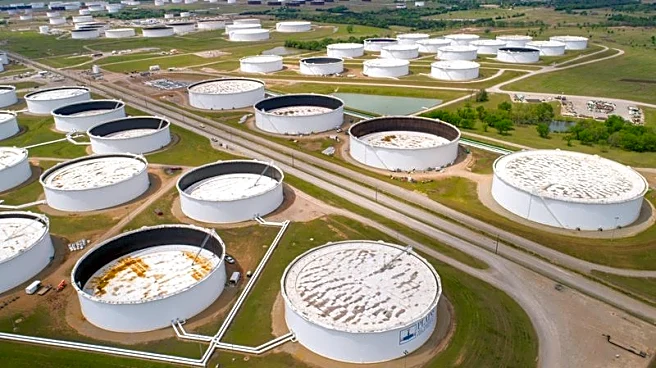
The U.S. trade deficit decreased in April, driven by a significant rise in petroleum exports, according to a report from the Commerce Department. Exports of petroleum products reached a record high of $36.7 billion, up from $27.6 billion in March, largely
due to increased volumes and higher oil prices linked to the Middle East conflict. This surge in petroleum exports contributed to a reduction in the trade deficit to $55.9 billion, down from a revised $56.6 billion in March. The overall exports increased by 2.6% to $327.1 billion, with goods exports rising by 4.1% to a record $221.3 billion. The U.S. has become a net oil exporter, with crude prices exceeding $100 per barrel since the onset of the war in late February. The increase in petroleum exports also led to a record high in exports of industrial supplies and materials, totaling $89.0 billion.
Why It's Important?
The narrowing of the U.S. trade deficit is a positive indicator for the country's economic growth, particularly in the second quarter. The increase in petroleum exports highlights the U.S.'s growing role as a significant player in the global energy market. This development could potentially boost the U.S. economy by contributing to GDP growth, as trade has been a drag on GDP for two consecutive quarters. However, the sustainability of this export growth is uncertain, as it is largely driven by higher energy prices due to geopolitical tensions. The situation underscores the complex interplay between global conflicts and economic performance, with potential implications for U.S. trade policies and energy strategies.
What's Next?
The continuation of high petroleum exports could further narrow the trade deficit, supporting economic growth. However, the reliance on elevated energy prices for export growth poses risks if prices stabilize or decline. The U.S. may need to explore diversifying its export base to ensure sustained economic benefits. Additionally, geopolitical developments, particularly in the Middle East, will likely influence future trade dynamics. Policymakers and businesses will need to monitor these factors closely to adapt strategies accordingly.