
What's Happening?
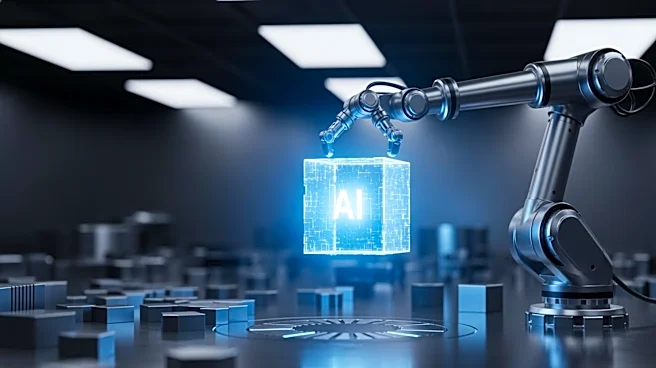
Manufacturers are increasingly integrating robots and AI into their operations to enhance workforce efficiency rather than replace human workers. According to the International Federation of Robotics,
the installation of robots has more than doubled over the past decade, with 542,000 robots installed in 2024 alone. The focus is shifting from the fear of AI replacing jobs to how these technologies can be integrated into existing processes to improve quality and productivity. The industry is recognizing the importance of human-in-the-loop approaches, where robots and AI tools are used to augment human capabilities. This shift is driven by the need for strategic thinking, problem-solving, and creativity, which are essential for redesigning processes around advanced robotics.
Why It's Important?
The integration of AI and robotics in manufacturing is significant as it addresses the industry's need for modernization and digital transformation. By focusing on augmentation rather than replacement, manufacturers can enhance productivity while maintaining human oversight and involvement. This approach not only preserves jobs but also creates new opportunities for workers to engage in higher-level tasks such as strategic leadership and AI architecture. The emphasis on reskilling and training ensures that the workforce is prepared for the next phase of AI, fostering a more inclusive and collaborative environment. This development is crucial for maintaining competitiveness in the global market and ensuring sustainable growth in the manufacturing sector.
What's Next?
As manufacturers continue to adopt AI and robotics, there will be a need for ongoing reskilling and training programs to prepare the workforce for new roles. Companies will need to establish clear priorities and guardrails for deploying AI and robotics, ensuring that safety, quality, and productivity are maintained. The industry will also need to address the technical challenges of integrating AI into existing processes, such as capturing and translating human expertise into robotic actions. As AI technology evolves, manufacturers must remain flexible and adaptable, ready to adjust their strategies to maximize return on investment. This ongoing evolution will require collaboration between industry leaders, policymakers, and educational institutions to ensure a smooth transition to a more automated future.
Beyond the Headlines
The shift towards AI and robotics in manufacturing has broader implications for the workforce and society. It challenges the traditional narrative of automation leading to job loss, highlighting the potential for technology to create more inclusive and diverse workplaces. By enabling people with disabilities to participate in operations through teleoperated systems, companies like Panasonic are demonstrating the potential for robots to bridge physical gaps and enhance human labor. This development also raises ethical considerations around the deployment of AI and robotics, emphasizing the need for responsible and equitable implementation. As the industry navigates these changes, it will be essential to balance technological advancement with human welfare and societal impact.