







What's Happening?
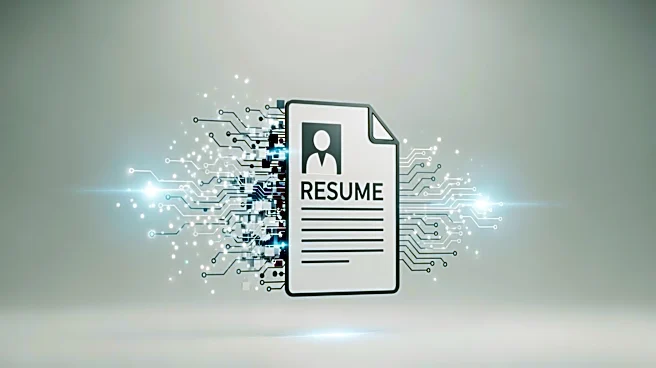
A recent study by Lighthouse Research & Advisory and Criteria Corp highlights growing concerns about the impact of AI on resume evaluation. The 2026 Talent Acquisition Trends Study reveals that only a third of employers are confident that resumes accurately
reflect candidates' skills. Despite this, two-thirds of employers continue to use resume screening as the first step in hiring. The study notes that AI-generated resumes are now common, with 92% of recruiting leaders encountering them frequently. This trend suggests a shift towards presentation over substance, as candidates use AI to optimize resumes. Many job seekers express frustration with the traditional resume format, preferring evaluations based on potential rather than past experience.
Why It's Important?
The increasing use of AI in resume creation and screening is reshaping hiring practices, potentially disadvantaging candidates who do not use AI tools. This shift could lead to less accurate assessments of candidates' true abilities, as polished resumes may not reflect actual skills. Employers relying heavily on resumes risk making poor hiring decisions, as indicated by the study's finding that organizations using resumes as a primary hiring tool are 35% more likely to report a bad hire. The study suggests that skills assessments and structured interviews may provide more reliable indicators of candidate potential.
What's Next?
As the debate over AI's role in hiring continues, companies may explore alternative evaluation methods, such as skills-based assessments and work samples, to better identify top talent. This shift could lead to changes in hiring practices, with a focus on evaluating candidates' potential and capabilities rather than relying solely on resumes. Employers may also need to adapt their recruitment strategies to address the challenges posed by AI-generated resumes, ensuring a fair and effective hiring process.