
What's Happening?
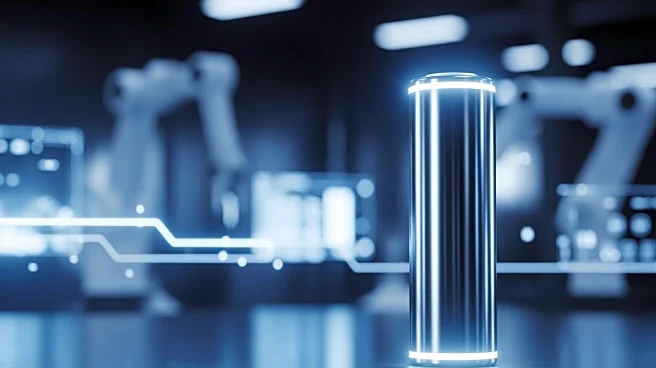
EVE Energy's flagship facility has been recognized as the world's first lighthouse factory in the cylindrical battery sector by the World Economic Forum and McKinsey & Company. This accolade highlights
EVE Energy's leadership in smart and digital manufacturing, achieved through the implementation of over 40 digital solutions. The factory features a high-speed production line capable of producing 300 batteries per minute, with 100% automation in key processes. The facility also employs AI-driven predictive maintenance systems to ensure continuous operation, achieving a maximum overall equipment efficiency of 95%. Additionally, EVE Energy has made significant strides in sustainability, reducing carbon emissions and energy consumption by over 60% and 55% respectively from 2022 to 2025. The company has also introduced a 'Battery Passport' system to enhance recycling efforts.
Why It's Important?
The recognition of EVE Energy's facility as a lighthouse factory underscores the growing importance of digital transformation in manufacturing. This development is significant for the U.S. and global industries as it sets a benchmark for integrating smart technologies to enhance efficiency and sustainability. The advancements made by EVE Energy could inspire other manufacturers to adopt similar technologies, potentially leading to widespread improvements in production processes and environmental impact. The focus on sustainability aligns with global efforts to reduce carbon footprints and promote eco-friendly practices, which are increasingly important to consumers and regulators alike.
What's Next?
EVE Energy's achievements may prompt other companies to invest in digital and sustainable manufacturing technologies. As industries worldwide strive to meet environmental goals, the adoption of AI and IoT solutions could become more prevalent. This shift may lead to increased collaboration between technology providers and manufacturers to develop innovative solutions that enhance productivity while minimizing environmental impact. Additionally, regulatory bodies may look to EVE Energy's model as a standard for future sustainability guidelines, potentially influencing policy decisions and industry standards.
Beyond the Headlines
The integration of advanced technologies in manufacturing not only improves efficiency but also raises questions about the future of the workforce. As automation increases, there may be a need for reskilling workers to manage and operate new technologies. EVE Energy's use of AR training and remote expert guidance to accelerate skill development highlights a potential pathway for addressing this challenge. Furthermore, the emphasis on sustainability could drive cultural shifts within industries, prioritizing long-term environmental health over short-term gains.