
What's Happening?
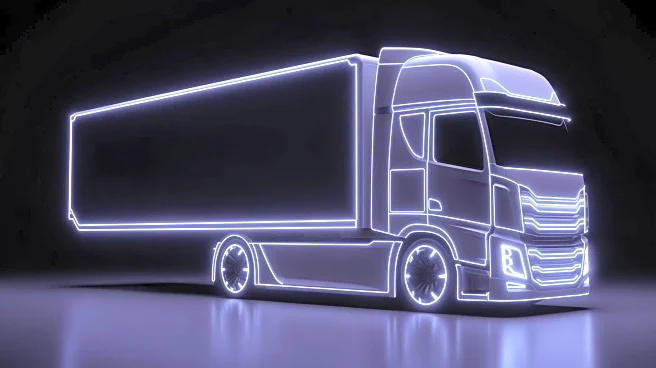
Slate Auto, an electric truck startup backed by Jeff Bezos, has announced that it has secured over 150,000 pre-reservations for its upcoming electric truck, which is set to launch by the end of 2026. The
company revealed these figures in a Q&A session with CEO Kris Barman, who addressed questions from reservation holders. The truck will feature options such as a child seat installation in the rear seats. Despite the promising reservation numbers, the company acknowledges that these do not guarantee success, as seen with other EV companies facing production challenges. Slate plans to produce approximately 150,000 trucks annually at a plant in Warsaw, Indiana, and aims to attract more buyers to ensure market success.
Why It's Important?
The significant number of preorders for Slate Auto's electric truck indicates strong consumer interest in new electric vehicle options, especially as the market faces challenges. The announcement comes at a time when other major players, like Ford, are struggling with their electric truck offerings, such as the F-150 Lightning, which is being phased out due to profitability issues. Slate's approach of designing a truck specifically as an EV, rather than adapting existing gasoline models, could position it advantageously in the market. The company's target price of around $25,000 could also make it a competitive option for consumers seeking affordable electric trucks.
What's Next?
Slate Auto will need to maintain and increase consumer interest as it moves towards production. The company plans to produce 150,000 trucks annually, which will require continued marketing efforts and possibly expanding its production capabilities. As the electric vehicle market evolves, Slate will need to navigate potential challenges such as supply chain issues and competition from established automakers. The success of its launch could influence other startups and established companies in their approach to electric vehicle development.
Beyond the Headlines
Slate Auto's strategy of building an electric truck from the ground up, rather than modifying existing gasoline models, reflects a broader trend in the automotive industry towards dedicated EV platforms. This approach could lead to more efficient and cost-effective production processes, potentially setting a new standard for future electric vehicle development. Additionally, the involvement of high-profile backers like Jeff Bezos may attract further investment and attention to the company, influencing its growth trajectory and market impact.