

What's Happening?
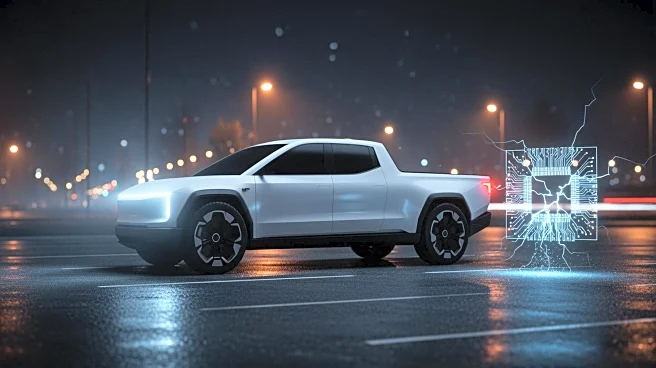
Tesla is currently facing a lawsuit following an incident where a driver, Justine Saint Amour, claims that the company's Full Self Driving (Supervised) system caused a crash involving a Cybertruck in Houston, Texas. The lawsuit, filed in Harris County
Court, details that the crash occurred in August of the previous year on the 69 Eastex Freeway. According to the court documents, the Cybertruck, while approaching a Y-shaped junction, failed to follow the right-hand curve of the freeway and instead attempted to continue straight towards a concrete barrier. Despite the driver's efforts to regain control, the vehicle struck the barrier, resulting in several injuries to Saint Amour, including herniated discs and nerve damage. The legal claim further argues that Tesla's reliance on a camera-based system, as opposed to radar or LiDAR sensors, contributed to the crash. The lawsuit accuses Tesla of negligence and seeks over one million dollars in damages.
Why It's Important?
This lawsuit highlights ongoing concerns and debates surrounding the safety and reliability of autonomous driving technologies. Tesla's Full Self Driving system has been a focal point in discussions about the future of transportation, with proponents advocating for its potential to reduce human error and opponents questioning its readiness and safety. The outcome of this case could have significant implications for Tesla and the broader autonomous vehicle industry, potentially influencing regulatory approaches and consumer trust. If the court finds Tesla liable, it could lead to increased scrutiny and pressure on the company to enhance its safety measures and technology. Additionally, this case may set a precedent for how similar incidents are handled legally, impacting the development and deployment of self-driving technologies across the industry.
What's Next?
As the lawsuit progresses, Tesla may face increased pressure to address the concerns raised about its Full Self Driving system. The company might need to consider revising its technology to incorporate additional safety features, such as radar or LiDAR sensors, to prevent similar incidents. The legal proceedings will likely attract attention from regulators, industry stakeholders, and the public, potentially influencing future regulations and standards for autonomous vehicles. Depending on the case's outcome, Tesla could face financial repercussions and be compelled to make significant changes to its self-driving technology. The case may also prompt other companies in the autonomous vehicle sector to reassess their safety protocols and technologies to avoid similar legal challenges.