

What's Happening?
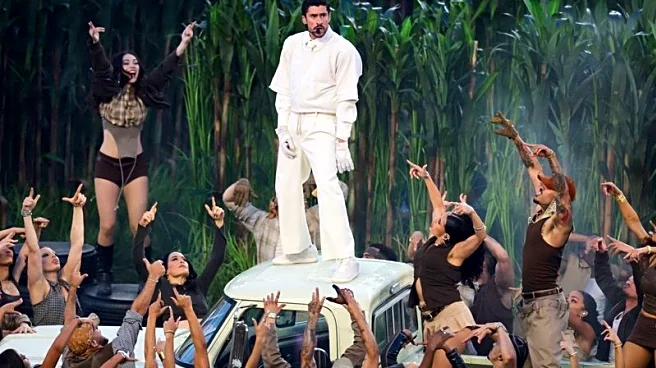
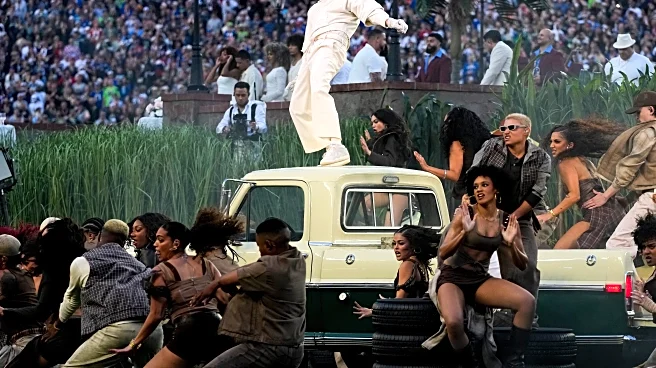
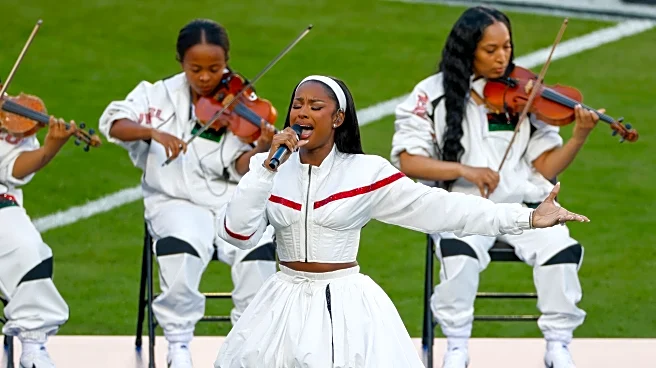
Bad Bunny delivered a memorable Super Bowl halftime show at Levi's Stadium in Santa Clara, California, featuring a diverse lineup of guest stars. The Puerto Rican artist was joined by Lady Gaga, who performed a salsa rendition of her hit 'Die With a Smile,' and Ricky Martin, who sang 'Lo Que Le Pasó a Hawaii.' The performance also included appearances by celebrities such as Cardi B, Karol G, Jessica Alba, and Young Miko, who joined the festivities on stage. The show was designed to celebrate unity and diversity, with Bad Bunny emphasizing the message 'together, we are America' during his performance. Despite some conservative backlash over the choice of a predominantly Spanish-speaking performer, the event was a celebration of community and cultural
diversity.
Why It's Important?
The inclusion of a predominantly Spanish-speaking artist like Bad Bunny in the Super Bowl halftime show highlights the growing influence of Latin music and culture in the United States. This performance underscores the NFL's recognition of the diverse demographics of its audience and the importance of representation in mainstream media. The show also serves as a cultural statement, promoting unity and inclusivity at a time when these values are increasingly significant in American society. The presence of high-profile celebrities further amplifies the message of solidarity and cultural celebration, potentially influencing public perception and acceptance of diverse cultural expressions.
What's Next?
Following the performance, there may be discussions about the future direction of Super Bowl halftime shows, particularly regarding the inclusion of diverse artists and cultural themes. The NFL might continue to explore opportunities to showcase a wider range of musical genres and performers to reflect the diverse interests of its audience. Additionally, the positive reception of Bad Bunny's performance could encourage other major events to consider similar approaches to inclusivity and representation. The conversation around cultural diversity in entertainment is likely to continue, influencing future programming decisions in sports and beyond.
Beyond the Headlines
The performance also raises questions about the role of entertainment in shaping cultural narratives and promoting social cohesion. By choosing a lineup that reflects a broad spectrum of cultural backgrounds, the Super Bowl halftime show can serve as a platform for dialogue about identity and belonging in America. This event may inspire other industries to consider how they can contribute to a more inclusive society through their platforms. Furthermore, the backlash from some conservative groups highlights ongoing cultural tensions, suggesting that entertainment can be both a unifying force and a point of contention in societal debates.