


What's Happening?
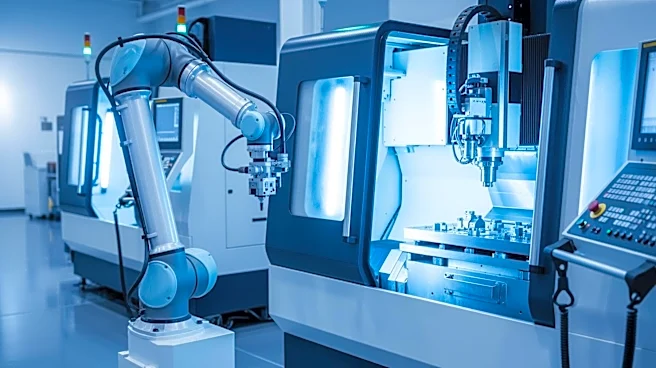
The integration of AI and robotics is transforming manufacturing processes, enabling factories to operate more efficiently and adaptively. AI-powered robotics are moving beyond traditional task-oriented roles to become decision-aware systems capable of dynamically
adjusting to operational conditions. This shift is driven by advances in AI-enabled vision systems and lower-cost computing, allowing robots to perceive, reason, and adjust in real-time. The development of intelligent supply chains and warehouses is expected to evolve significantly in the next three to five years, with AI systems orchestrating robotic fleets to optimize production, inventory, and shipping processes. This transformation is particularly important in addressing challenges such as labor shortages and supply chain volatility.
Why It's Important?
The convergence of AI and robotics in manufacturing is crucial for enhancing efficiency and competitiveness in the industry. By enabling robots to adapt to changing conditions and optimize processes, manufacturers can reduce downtime, improve productivity, and respond more effectively to market demands. This technological advancement supports high-mix, low-volume production, making automation more accessible and economically viable. As manufacturers increasingly adopt AI-driven systems, they can achieve greater operational excellence and redefine industry standards. The ability to quickly adapt to new challenges and opportunities is essential for maintaining a competitive edge in the global market.
What's Next?
In the coming years, AI is expected to act as a unifying intelligence layer in manufacturing, linking robotics with data from machines, sensors, and enterprise platforms. This integration will enhance predictive maintenance, improve efficiency, and support collaborative manufacturing, where humans and robots work side by side. As AI-driven systems become more prevalent, manufacturers will need to focus on training and hiring strategies that emphasize robotic supervision and data literacy. The continued evolution of AI and robotics will likely lead to more intelligent and flexible manufacturing systems, setting new benchmarks for operational excellence.