
What's Happening?
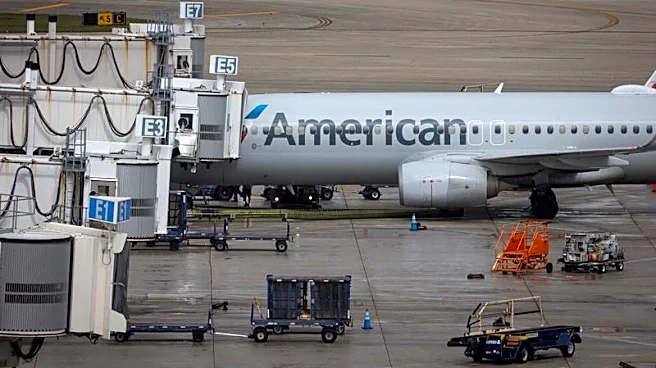
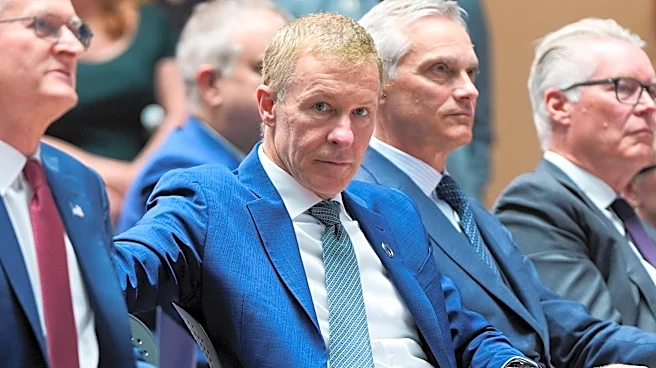
American Airlines CEO Robert Isom has publicly dismissed the possibility of a merger with United Airlines, citing significant regulatory and political challenges. During a 'State of the Airline' meeting,
Isom emphasized that such a merger would be viewed as anti-competitive and detrimental to the industry. Instead, Isom hinted at potential strategic partnerships, particularly with Alaska Airlines, and the possibility of acquiring select assets from Spirit Airlines. This approach suggests a focus on enhancing American Airlines' market position and operational efficiency without the complexities of a full merger.
Why It's Important?
The rejection of a merger with United Airlines by American Airlines highlights the complexities and regulatory hurdles involved in consolidating two of the largest U.S. airlines. Such a merger would likely face intense scrutiny and opposition, potentially leading to prolonged legal battles. By exploring partnerships with Alaska Airlines and considering Spirit Airlines' assets, American Airlines aims to strengthen its competitive edge, particularly on the West Coast. This strategy could help American Airlines improve its market share and operational capabilities without the risks associated with a full merger.
What's Next?
American Airlines' openness to a partnership with Alaska Airlines could lead to increased collaboration and shared resources, enhancing their competitive stance against other major airlines like Delta and United. The potential acquisition of Spirit Airlines' assets may also provide American Airlines with valuable infrastructure and market access. As these discussions progress, stakeholders will closely monitor regulatory responses and the strategic moves of other airlines in the industry.