




What's Happening?
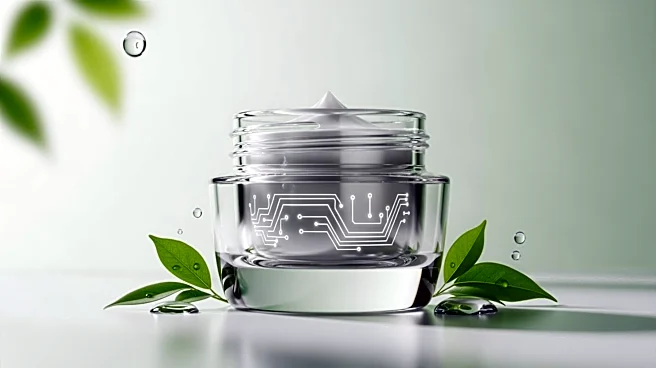
The beauty industry is witnessing a shift towards 'efficacy-driven sustainability' through the adoption of tech-integrated packaging. This approach focuses on enhancing the efficiency of beauty products, thereby reducing resource wastage throughout their
lifecycle. Traditional skincare products often suffer from a high 'efficacy loss rate,' where active ingredients fail to penetrate the skin barrier effectively. Tech-integrated packaging, which includes innovations like microcurrents, phototherapy, and thermal modulation, aims to bridge this gap by improving ingredient absorption by 15-30%. This not only enhances product performance but also allows for the use of lower concentrations of raw materials, reducing environmental impact. The industry is also exploring smart applicators that ensure accurate dosing, further minimizing waste.
Why It's Important?
This development is significant as it represents a paradigm shift in how the beauty industry approaches sustainability. By focusing on product efficacy, companies can reduce the environmental footprint associated with sourcing and manufacturing high-impact ingredients. This approach aligns with growing consumer expectations for transparency and evidence-based product claims. As consumers become more informed and skeptical, the demand for products that deliver measurable results is increasing. For brands, this means moving away from promise-driven marketing to evidence-based product design, which can build long-term trust with consumers. The integration of technology into packaging not only enhances product performance but also supports sustainability goals, making it a crucial innovation in the beauty sector.
What's Next?
As the beauty industry continues to integrate technology into packaging, brands will need to focus on clear communication and realistic positioning to manage consumer expectations. The success of these innovations will depend on their ability to deliver consistent results and improve user compliance. Brands may also explore further advancements in smart packaging technologies to enhance user experience and product efficacy. Regulatory bodies and industry stakeholders will likely play a role in setting standards for these technologies to ensure consumer safety and product effectiveness. The ongoing evolution of tech-integrated packaging could lead to broader applications across other sectors, promoting a more sustainable approach to product development.
Beyond the Headlines
The shift towards efficacy-driven sustainability in the beauty industry highlights the growing importance of engineering in achieving environmental goals. By optimizing the efficacy-to-waste ratio, companies can improve the efficiency of their supply chains, reducing resource use and environmental impact. This approach also underscores the need for collaboration between formulators, packaging engineers, and R&D teams to design products that meet consumer expectations while minimizing environmental harm. As the industry embraces this new paradigm, it may inspire similar innovations in other sectors, contributing to a broader cultural shift towards sustainability.