






What's Happening?
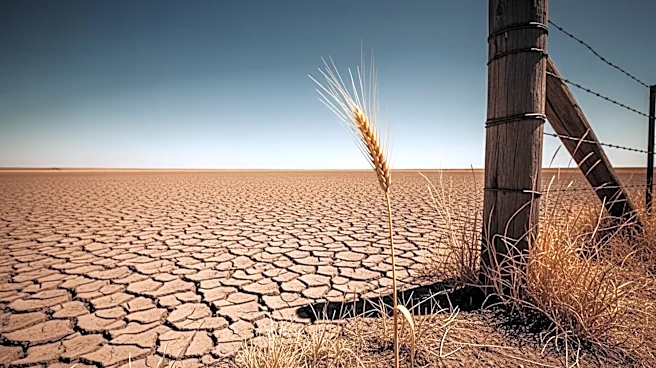
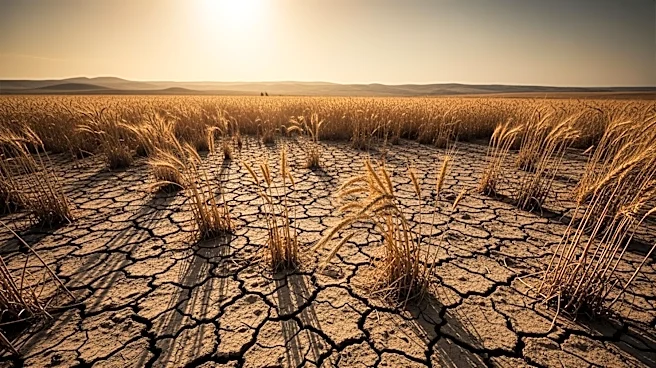
Researchers and technology companies are increasingly exploring the use of artificial intelligence (AI) to improve water management in agriculture. As global water supplies face pressure from population growth, aging infrastructure, and recurring droughts,
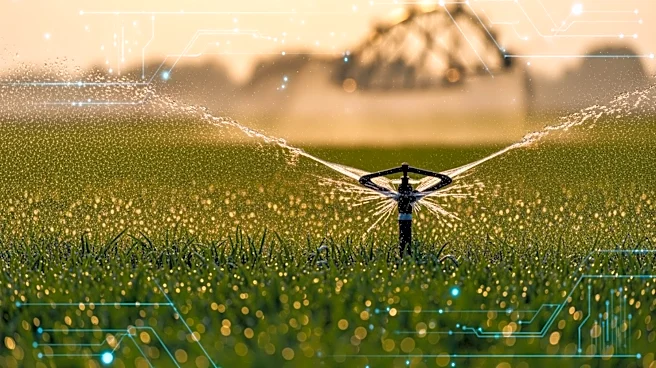
AI offers potential solutions for more precise irrigation decisions. Data centers, which support AI systems, consume significant amounts of water for cooling, but AI's application in agriculture could help reduce water usage. In Nebraska, for example, AI-assisted irrigation tools are being tested to optimize water use from the Ogallala Aquifer, which is under stress from declining water levels. These tools help farmers manage data from soil moisture sensors and weather data to make informed irrigation decisions, potentially saving significant amounts of water while maintaining crop yields.
Why It's Important?
The integration of AI in agriculture could have significant implications for water conservation and agricultural productivity. As water resources become increasingly scarce, efficient water management is crucial for sustaining agricultural output. AI-assisted irrigation systems can help farmers optimize water use, potentially leading to substantial water savings and ensuring the sustainability of groundwater resources like the Ogallala Aquifer. This technology not only supports environmental conservation but also enhances the economic viability of farming by reducing input costs and maintaining yields. The broader adoption of AI in agriculture could play a critical role in addressing global water scarcity challenges.
What's Next?
As AI technology continues to develop, its adoption in agriculture is expected to grow. Companies are working on refining AI-assisted irrigation tools to make them more accessible and effective for farmers. The collaboration between tech companies and agricultural stakeholders is likely to expand, with ongoing projects aimed at improving irrigation efficiency in various regions. However, the adoption of these technologies remains relatively low, and efforts to increase awareness and training for farmers will be essential. The success of AI in agriculture will depend on its ability to provide reliable, actionable insights that farmers can trust and implement.