

What's Happening?
The U.S. International Development Finance Corporation (DFC) and Chubb have announced the inclusion of six additional American insurance partners to their Maritime Reinsurance plan. These partners include Travelers, Liberty Mutual Insurance, Berkshire
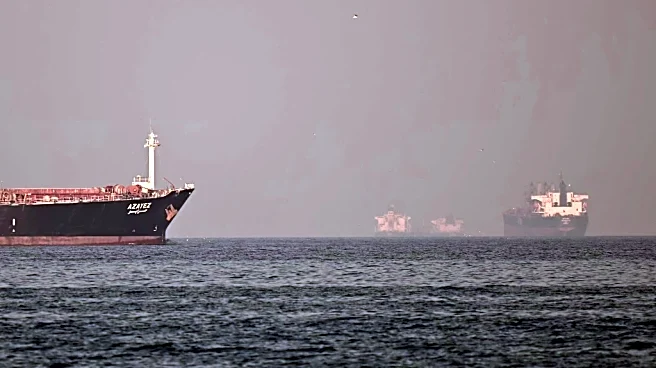
Hathaway, AIG, Starr, and CNA. This collaboration increases the total reinsurance facility to $40 billion, with $20 billion from DFC and an additional $20 billion from Chubb and its partners. The initiative aims to stabilize maritime trade through the Strait of Hormuz and support American and allied businesses amid ongoing conflicts in the Middle East. The reinsurance facility will cover War Marine Risk Insurance for Hull & Liability and Cargo, providing essential coverage during uncertain times.
Why It's Important?
This expansion of the Maritime Reinsurance plan is crucial for maintaining stability in international maritime trade, particularly in the strategically significant Strait of Hormuz. By providing substantial insurance coverage, the initiative supports global commerce and U.S. economic interests, ensuring that American and allied businesses can continue operations despite geopolitical tensions. The involvement of major insurance companies underscores the importance of public-private partnerships in addressing global trade challenges. This move also reflects a strategic effort to mitigate risks associated with maritime operations in conflict zones, thereby safeguarding economic activities and supply chains.
What's Next?
The DFC and its partners will soon open the application portal for vessels seeking coverage under the reinsurance facility. Eligibility will be determined through a comprehensive vetting process, including sanctions checks and Know Your Customer procedures. As the application process unfolds, stakeholders in the maritime industry will be closely monitoring the impact of this expanded coverage on trade operations and risk management strategies. The success of this initiative could lead to further collaborations between government entities and private insurers, potentially setting a precedent for similar efforts in other high-risk regions.