
What's Happening?
The NFL has announced a series of rule proposals ahead of the upcoming owners' meetings, with a particular focus on addressing unpenalized flagrant acts. One significant proposal aims to allow league personnel to consult with on-field officials regarding
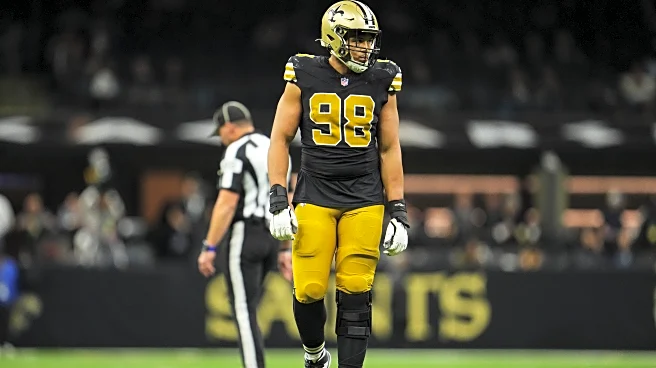
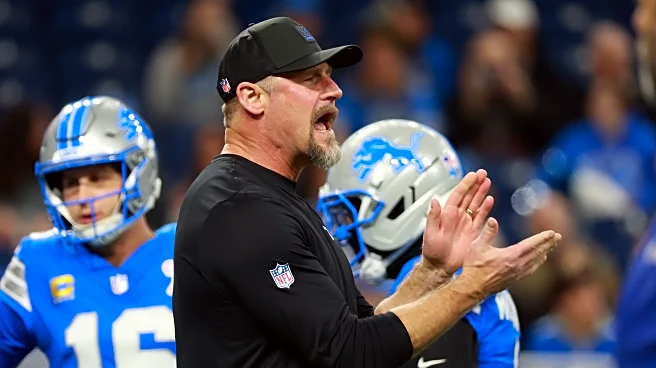
disqualifications for flagrant actions that are not called during the game. This proposal is partly in response to an incident involving the Detroit Lions last year, where a player was not penalized for a flagrant act during a game. The proposed rule would enable the NFL to intervene and potentially eject players for such actions, even if they are not immediately recognized by on-field officials. This change is part of a broader set of proposals submitted by the NFL competition committee, which includes other modifications related to game play and officiating.
Why It's Important?
The proposed rule change is significant as it addresses a gap in the current officiating process that can impact the fairness and integrity of NFL games. By allowing league personnel to intervene in cases of unpenalized flagrant acts, the NFL aims to ensure that players are held accountable for actions that could affect the outcome of a game. This change could lead to more consistent enforcement of rules and potentially reduce the number of controversial incidents that arise from missed calls. For teams like the Detroit Lions, who have been directly affected by such incidents, this proposal represents a step towards ensuring a level playing field. Additionally, the proposal reflects the NFL's ongoing efforts to adapt its rules to maintain the integrity of the sport in the face of evolving challenges.
What's Next?
The proposed rule changes will be discussed at the NFL owners' meetings, where they will be subject to approval. If passed, the new rules could be implemented in the upcoming season, providing a framework for addressing unpenalized flagrant acts more effectively. The NFL will need to establish clear guidelines for how league personnel will identify and act on such incidents in real-time. This may involve training and coordination with on-field officials to ensure seamless implementation. The outcome of these discussions will be closely watched by teams, players, and fans, as it could have a significant impact on how games are officiated in the future.