
What's Happening?
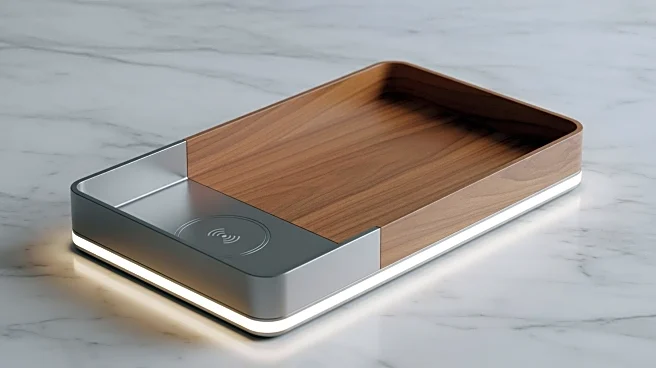
Twelve South, a company known for its innovative gadget accessories, has launched a new product called the Valet. This device is a stylish tray designed to hold everyday items like keys and sunglasses
while offering wireless charging capabilities. Priced at $179.99, the Valet features a soft leather surface available in various colors and a customizable metal frame. It includes a raised square for wireless charging up to 15 watts and an additional USB port for charging a second device. The Valet is powered by a 36-watt supply and comes with a 1.5-meter cable. Unlike other charging hubs, the Valet is not intended for charging laptops or multiple devices simultaneously. Instead, it aims to provide a seamless charging experience for essential devices, particularly smartphones. The product is expected to ship in the coming weeks.
Why It's Important?
The introduction of the Valet by Twelve South highlights a growing trend in the tech industry towards integrating technology with home decor. As consumers increasingly seek products that blend functionality with aesthetics, companies like Twelve South and Ikea are responding with gadgets that resemble home decor items. The Valet's design caters to this demand by offering a practical solution for charging devices without compromising on style. This trend reflects a broader shift in consumer preferences towards minimalist and aesthetically pleasing tech solutions. The Valet's launch at CES 2026 underscores the importance of innovation in meeting evolving consumer expectations and the potential for growth in the market for tech products that double as home decor.
What's Next?
As the Valet enters the market, it is likely to attract attention from consumers who prioritize both functionality and design in their tech purchases. The product's success could encourage other companies to explore similar innovations, further blurring the lines between technology and home decor. Additionally, the Valet's launch at CES 2026 may inspire other exhibitors to showcase products that emphasize design as much as functionality. This could lead to increased competition in the market for aesthetically pleasing tech solutions, prompting companies to invest more in design and user experience.