


What's Happening?
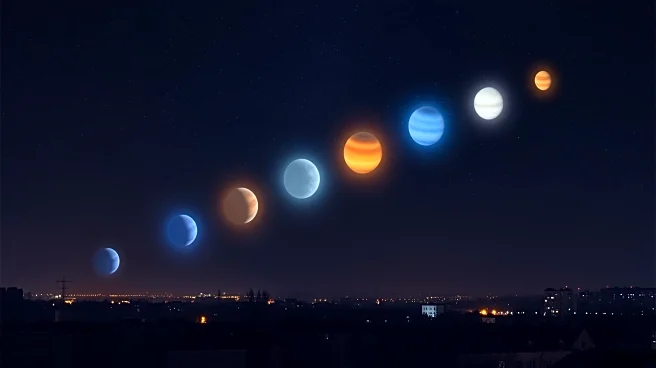
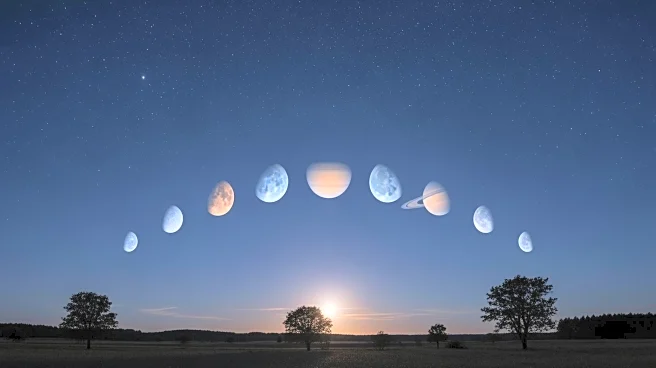
A rare planetary alignment is occurring this week, featuring Jupiter, Saturn, Venus, Neptune, Uranus, and Mercury in a 'planetary parade.' This celestial event is visible in the western sky, with the best viewing opportunities occurring shortly after
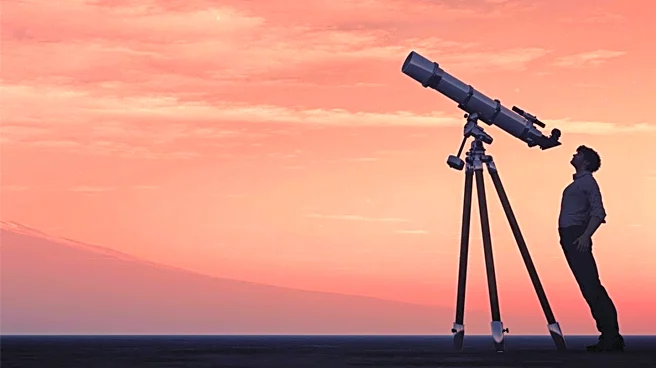
sunset. Observers are advised to find a location with a clear view of the horizon and use stargazing apps to locate the planets. While Jupiter and Venus are visible to the naked eye, Neptune and Uranus require telescopes for viewing. The alignment provides a unique opportunity for both amateur and professional astronomers to observe multiple planets simultaneously.
Why It's Important?
Planetary alignments are significant astronomical events that offer educational and observational opportunities for the public and scientists alike. Such events can inspire interest in astronomy and space science, potentially leading to increased public engagement and support for scientific research. For astronomers, alignments provide a chance to study planetary positions and movements, contributing to our understanding of the solar system. Additionally, these events can boost local economies through increased tourism, as enthusiasts travel to optimal viewing locations.
What's Next?
As the alignment peaks, astronomers and enthusiasts will continue to observe and document the event. The data collected can contribute to ongoing research in planetary science. Public interest generated by the alignment may lead to increased participation in astronomy-related activities and events. Educational institutions and observatories may organize viewing sessions and workshops to capitalize on the public's curiosity. Future celestial events, such as eclipses and meteor showers, will likely continue to draw attention and engagement from the public.