
What's Happening?
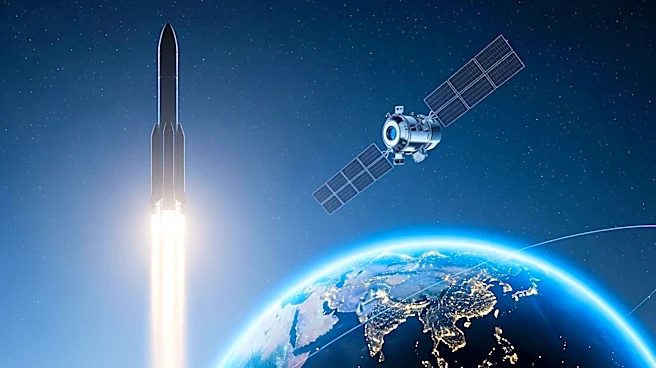
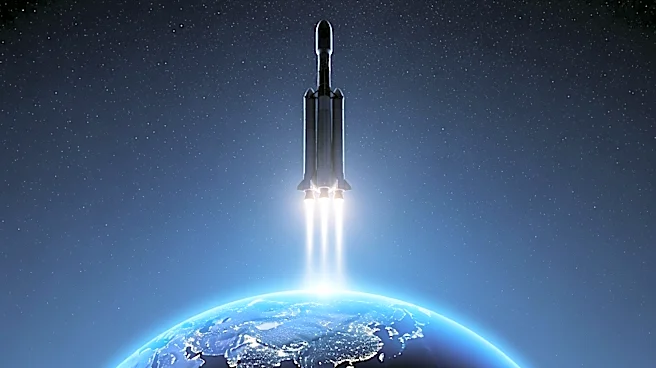
SpaceX is set to attempt the launch of its Falcon Heavy rocket from NASA's Kennedy Space Center after a weather-related delay. The rocket will carry the ViaSat-3 F3 satellite to a geosynchronous transfer
orbit. The launch is scheduled for 10:13 a.m. EDT, with a 90% chance of favorable weather. The mission marks the 12th flight of a Falcon Heavy rocket and aims to enhance Viasat's satellite network capacity. The launch will utilize a combination of new and reused boosters, with the core stage being discarded in the Atlantic Ocean.
Why It's Important?
The successful launch of the Falcon Heavy rocket is crucial for SpaceX's reputation and operational schedule. It demonstrates the company's ability to handle complex missions and manage weather-related challenges. The mission also highlights the growing demand for satellite-based internet services, with Viasat aiming to expand its coverage and capacity. This launch is part of a broader trend of increasing commercial satellite deployments, which are essential for global connectivity and technological advancement.
What's Next?
Following the launch, the ViaSat-3 F3 satellite will undergo a commissioning process before becoming operational. This involves orbit raising and system checkouts, which are expected to take several months. The satellite will enhance Viasat's network capacity, particularly in the Asia-Pacific region, supporting the growing demand for high-speed internet services. SpaceX will continue to focus on its launch schedule, with future missions planned to further expand its capabilities and market presence.