


What's Happening?
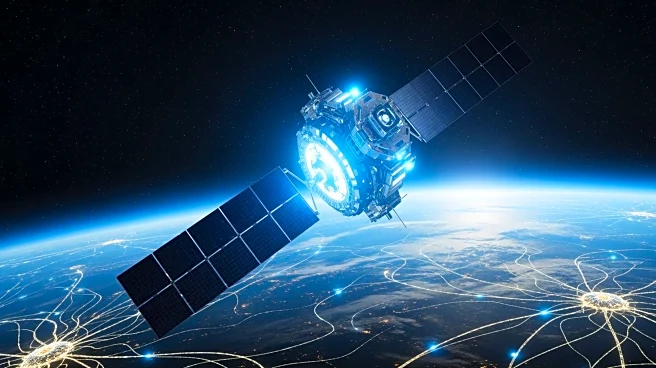
Elon Musk has made a bold prediction regarding the future of artificial intelligence (AI), suggesting that the technology's continued evolution may depend on relocating operations to space. Speaking on the Dwarkesh Podcast, Musk highlighted the power limitations on Earth as a significant hurdle for AI's growth. He proposed that utilizing solar energy in space could provide the necessary power for AI's expansion. Musk's prediction suggests that within 30 to 36 months, space could become the most cost-effective location for AI operations. This idea aligns with previous hypotheses from other tech leaders like Jeff Bezos, emphasizing the environmental benefits of moving AI data centers off-planet.
Why It's Important?
Musk's prediction underscores the growing energy
demands of AI technologies, which have rapidly advanced in recent years. The potential move to space-based operations could alleviate environmental concerns associated with terrestrial data centers, which consume significant power and contribute to carbon emissions. If realized, this shift could redefine the infrastructure of AI, impacting industries reliant on AI advancements. The proposal also highlights the challenges of scaling power production on Earth, as Musk noted the difficulty in doubling the current U.S. power capacity. This development could influence future investments in space technology and renewable energy solutions.
What's Next?
If Musk's prediction gains traction, it could prompt increased investment in space technology and renewable energy research. Stakeholders in the AI industry may begin exploring the feasibility of space-based operations, considering the logistical and financial implications. Governments and private companies might collaborate to develop the necessary infrastructure for solar energy collection and data transmission from space. Additionally, this concept could spark discussions on international regulations and agreements regarding space utilization for commercial purposes.