


What's Happening?
Jill and Derek Dooley, along with their two daughters, have transitioned from living in a $400,000 house in Florida to a full-time RV lifestyle. This decision was driven by Jill's burnout from her teaching career and a desire for more family time. The
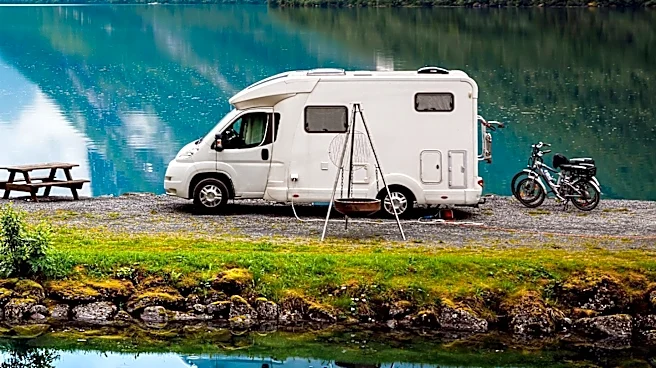
family sold their home and most of their possessions, purchasing an RV to travel and live more freely. The RV, which is about 450 square feet, includes a primary bedroom, living room, kitchen, and a playroom for the children. Derek, who works remotely in healthcare data analytics, and Jill, who now homeschools their children, have found the lifestyle change to be less stressful and more fulfilling. The family has been traveling across the U.S., starting in Florida and planning to reach Maine, while enjoying the flexibility and reduced expenses of RV living.
Why It's Important?
The Dooleys' shift to RV living reflects a growing trend among families and retirees seeking alternative lifestyles that prioritize flexibility, reduced living costs, and increased family time. This lifestyle change highlights a broader societal shift towards minimalism and the reevaluation of traditional living arrangements. By downsizing, the Dooleys have reduced their financial burden, allowing them to focus on experiences rather than material possessions. This move also underscores the increasing feasibility of remote work, which enables individuals to maintain their careers while living nomadically. The family's experience may inspire others to consider similar lifestyle changes, particularly in the context of rising housing costs and the desire for a more balanced life.
What's Next?
The Dooleys plan to continue their RV journey, exploring new states and providing their children with hands-on learning experiences through travel. As they adapt to this lifestyle, they will likely refine their travel plans and budgeting strategies to maximize their enjoyment and educational opportunities. The family may also serve as a model for others considering a similar transition, potentially influencing the RV and travel industries as more people seek flexible living arrangements. Additionally, their story may contribute to discussions on work-life balance and the benefits of alternative education methods, such as homeschooling on the road.