







What's Happening?
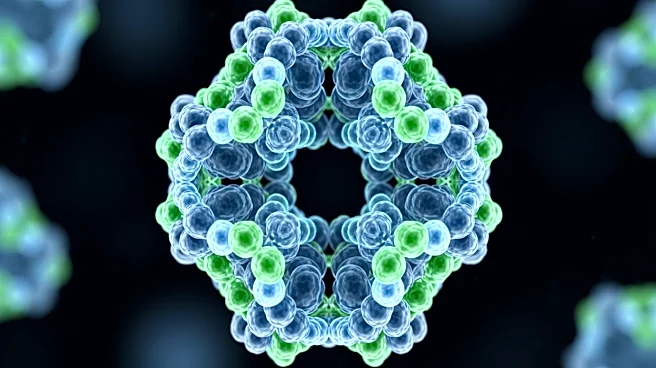
The market for self-assembling protein nanoparticles is projected to grow significantly, reaching a value of $3.36 billion by 2030. This growth is driven by advances in biotechnology and nanotechnology, with applications in precision medicine and targeted
therapies. The market is expected to expand from $1.55 billion in 2025 to $1.81 billion in 2026, with a compound annual growth rate (CAGR) of 16.6%. Key drivers include increased investments in biopharmaceutical research, vaccine development, and the demand for cancer and gene therapies.
Why It's Important?
The rapid growth of the self-assembling protein nanoparticles market reflects the increasing importance of precision medicine and targeted therapies in healthcare. These nanoparticles offer potential solutions for delivering treatment agents directly to specific cells or tissues, improving treatment efficacy and reducing side effects. The market's expansion is likely to drive further innovation in biotechnology and nanotechnology, supporting the development of new therapeutic approaches and enhancing the U.S.'s position in the global biotech industry.
What's Next?
As the market continues to grow, stakeholders in the biotech industry may focus on developing new applications for self-assembling protein nanoparticles, particularly in personalized medicine and immunotherapy. The increasing demand for advanced therapies could lead to further investments in research and development, as well as collaborations between academic institutions, biotech companies, and healthcare providers. The market's trajectory will be closely monitored by investors and industry leaders seeking to capitalize on emerging opportunities in this field.