

What's Happening?
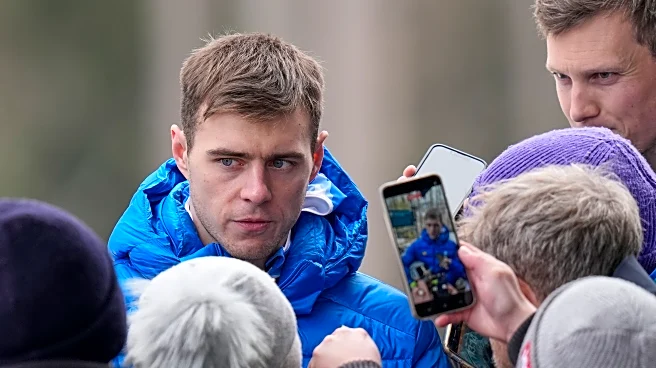
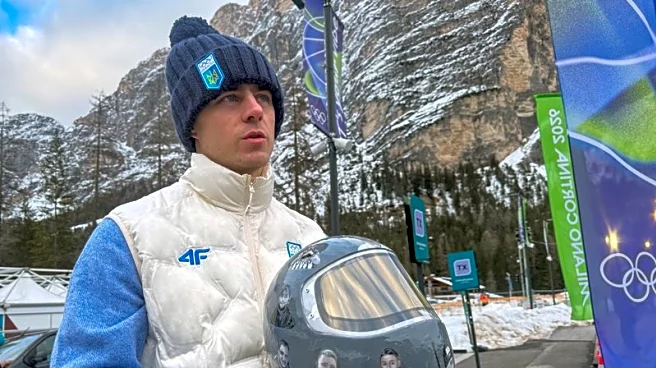
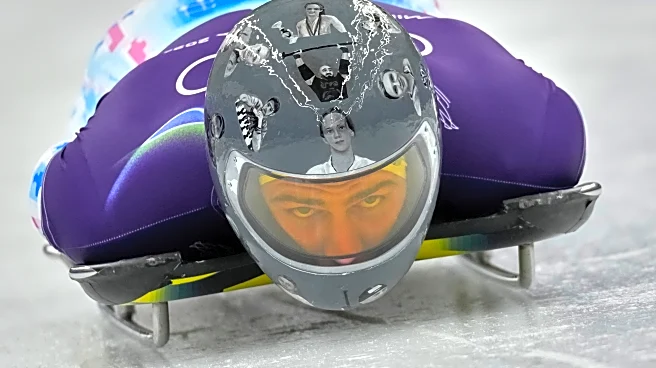
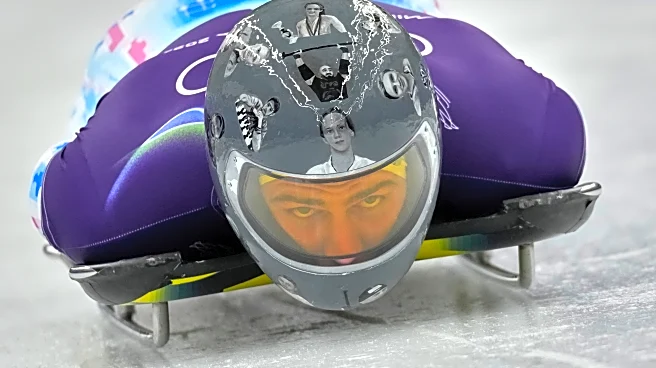
Vladyslav Heraskevych, a Ukrainian skeleton racer, was disqualified from the Winter Olympics for refusing to adhere to the International Olympic Committee's (IOC) guidelines on athlete expression. Heraskevych intended to compete wearing a helmet featuring images of Ukrainian athletes killed in the ongoing war. Despite a meeting with IOC President Kirsty Coventry, Heraskevych remained resolute in his decision, leading to his disqualification. The IOC expressed regret over the decision, emphasizing the need to maintain a neutral field of play. Heraskevych plans to appeal the decision to the Court of Arbitration for Sport.
Why It's Important?
The disqualification of Heraskevych raises significant questions about the balance between personal expression and regulatory
compliance in international sports. It highlights the complexities faced by athletes who wish to use their platform to make political or personal statements. The incident also draws attention to the broader issue of how international sports bodies manage expressions related to geopolitical conflicts, potentially influencing future policy decisions. The IOC's handling of this case may impact its reputation and the perception of its commitment to neutrality and fairness.
What's Next?
Heraskevych's appeal to the Court of Arbitration for Sport could lead to a review of the IOC's guidelines on athlete expression. The outcome may influence future cases and the IOC's approach to similar situations. Additionally, the incident may prompt discussions within the international sports community about the role of personal expression in sports and the potential need for policy adjustments to accommodate diverse perspectives while maintaining the integrity of the competition.