





What's Happening?
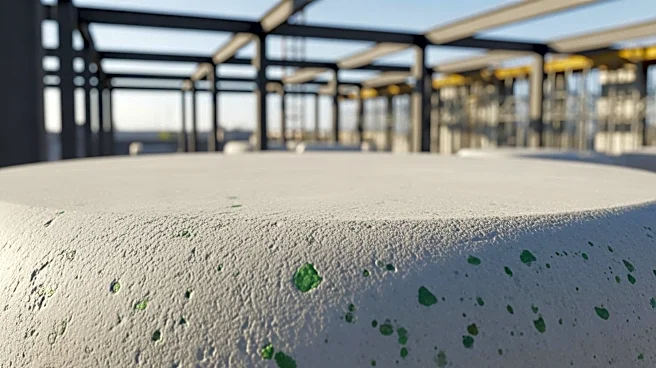
The global market for Low Carbon Concrete Shrinkage Reduction Additives is projected to experience significant growth from 2026 to 2035. This expansion is driven by the construction industry's need to reduce embodied carbon while ensuring the durability
of concrete structures. These chemical admixtures, including shrinkage reducing admixtures and expansive agents, are essential for mitigating shrinkage in low-carbon concrete mixes. The market is transitioning from niche products to mainstream components due to stringent green building codes and corporate ESG mandates. The demand is particularly strong in infrastructure and commercial building sectors, where durability and sustainability are prioritized.
Why It's Important?
The growth of this market is crucial as the construction industry seeks to meet net-zero targets and reduce its carbon footprint. As regulations on embodied carbon become more stringent, the adoption of low-carbon concrete mixes will become standard practice. Shrinkage reduction additives play a vital role in ensuring that these eco-friendly mixes do not compromise structural integrity. The market's expansion reflects a broader shift towards sustainable construction practices, with significant implications for reducing CO2 emissions from the built environment, which accounts for a substantial portion of global emissions.
What's Next?
The market is expected to continue growing as more regions adopt stringent building codes and as the demand for sustainable construction materials increases. Innovations in additive formulations and the integration of digital mix design support are anticipated to drive further growth. The competitive landscape will likely see increased activity from integrated solution providers offering comprehensive services. As the industry moves towards deeper carbon cuts, the role of these additives will become even more critical in achieving sustainability goals.