








What's Happening?
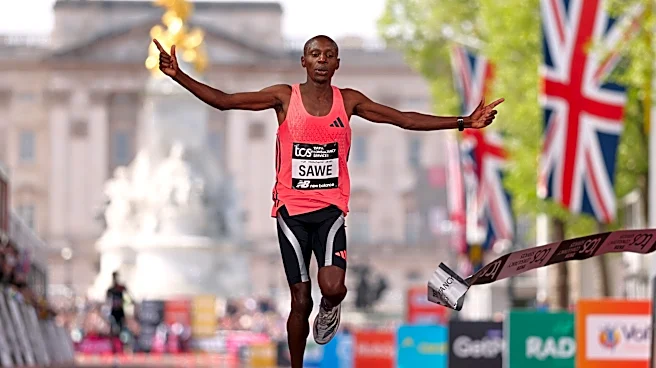
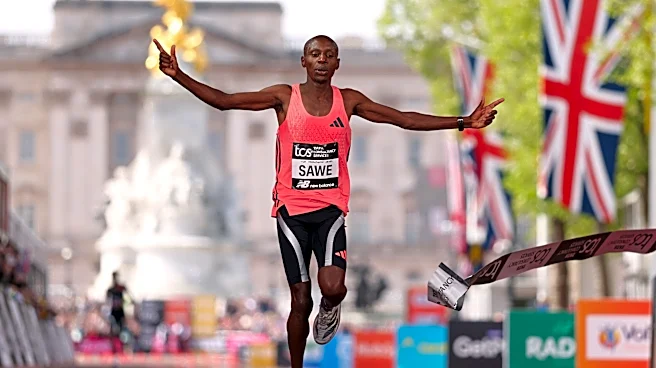
In a historic achievement, Sabastian Sawe of Kenya won the London Marathon, becoming the first runner to officially complete a marathon in under two hours. Sawe finished the race in 1 hour, 59 minutes, and 30 seconds, breaking the previous world record
by 65 seconds. This remarkable feat was achieved in a competitive race where Ethiopia's Yomif Kejelcha also finished under two hours, marking his debut marathon. Uganda's Jacob Kiplimo completed the podium, also surpassing the previous world record. Sawe's performance was characterized by a strong finish, as he accelerated in the latter half of the race, drawing energy from the cheering crowds in London.
Why It's Important?
This achievement is significant as it redefines the limits of human endurance in marathon running. Breaking the two-hour barrier in an official race setting, as opposed to a controlled environment, sets a new benchmark for athletes worldwide. It highlights the advancements in training, strategy, and perhaps even technology in sports. The event also underscores the dominance of East African runners in long-distance events, potentially influencing future sponsorships, training programs, and international competitions. The achievement could inspire a new generation of athletes to push the boundaries of what is considered possible in marathon running.
What's Next?
Following this groundbreaking performance, the marathon community may see increased interest in breaking further records. Athletes and coaches might explore new training methodologies and strategies to optimize performance. Additionally, marathon organizers could consider revising race conditions to facilitate faster times. The achievement may also prompt discussions on the role of technology and equipment in sports, as athletes seek to gain competitive edges. The London Marathon's success in hosting such a historic event could enhance its reputation, attracting more elite runners in future editions.
Beyond the Headlines
The breaking of the two-hour marathon barrier in an official race setting raises questions about the future of human athletic performance. It challenges previous assumptions about physical limits and may lead to ethical debates regarding the use of technology in sports. The achievement also highlights the cultural and economic impact of marathon running, as cities hosting such events gain international attention and economic benefits. Furthermore, it may influence public interest in running and fitness, encouraging more people to participate in marathons and other endurance sports.