



What's Happening?
The U.S. stock market experienced a downturn, with the S&P 500 falling 0.9% from its record high, the Dow Jones Industrial Average dropping 331 points, and the Nasdaq composite decreasing by 1.4%. This decline is attributed to rising oil prices and increased
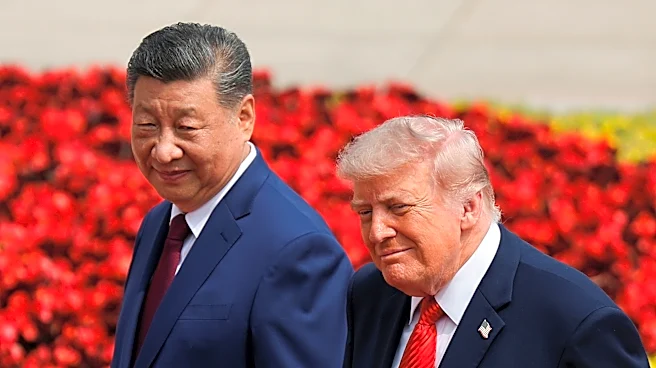
bond yields, driven by ongoing concerns about the war with Iran. The conflict has led to higher oil prices, with Brent crude rising 3.2% to $109.11 per barrel. The situation is further complicated by U.S.-Iran talks stalling and recent attacks on ships in the region. President Trump, who recently concluded a summit in Beijing with Chinese leader Xi Jinping, discussed potential U.S.-China trade deals and the situation in Iran.
Why It's Important?
The stock market's reaction reflects investor anxiety over geopolitical tensions and their potential impact on global economic stability. Rising oil prices can lead to increased inflation, affecting consumer spending and business costs. The situation also highlights the interconnectedness of global markets, where regional conflicts can have widespread economic repercussions. The U.S.-China discussions, while offering some optimism for trade relations, are viewed with skepticism due to past unfulfilled agreements. The outcome of these geopolitical developments will significantly influence market trends and economic policies.
What's Next?
Investors and policymakers will closely monitor developments in the Iran conflict and U.S.-China trade relations. Any progress in negotiations or escalation in tensions could lead to further market volatility. The U.S. administration's approach to these issues will be critical in shaping future economic conditions. Additionally, the impact of rising oil prices on inflation and consumer behavior will be a key focus for economic analysts.