







What's Happening?
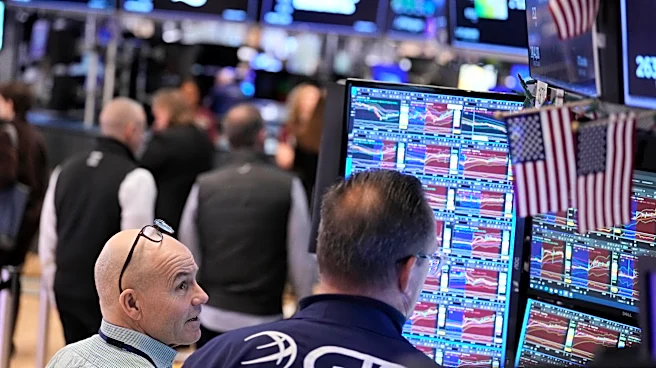
JPMorgan has shifted to a bullish outlook on the stock market following a ceasefire agreement between the U.S. and Iran. The ceasefire, which is set to last for two weeks, has led to a significant drop in oil prices and a rally in U.S. stocks. JPMorgan analysts
expect this development to trigger a relief rally, potentially pushing the S&P 500 up by 6% from its previous close. The firm anticipates that the ceasefire will coincide with a positive earnings season, particularly benefiting the tech sector, which has seen recent valuation declines. The reopening of the Strait of Hormuz and the potential extension of the ceasefire are key factors in JPMorgan's optimistic market outlook.
Why It's Important?
The ceasefire between the U.S. and Iran has significant implications for global markets, particularly in terms of oil prices and stock market performance. A reduction in geopolitical tensions can lead to lower oil prices, which in turn can reduce inflationary pressures and support economic growth. For investors, the anticipated stock market rally presents opportunities, especially in sectors like technology and consumer discretionary, which are expected to benefit from improved earnings. Additionally, a decrease in bond yields and a potential rebound in precious metals could further influence investment strategies. The ceasefire's impact on the financial markets underscores the interconnectedness of geopolitical events and economic indicators.
What's Next?
If the ceasefire holds and is extended beyond the initial two weeks, it could lead to sustained positive momentum in the stock market. Investors will be closely monitoring the situation for any signs of renewed tensions or disruptions. The upcoming earnings season will also be a critical factor, as strong corporate performance could further bolster market confidence. Additionally, the response of other major economies and their markets to the ceasefire will be important to watch, as global economic conditions remain fragile. Policymakers and financial institutions will likely continue to assess the situation and adjust their strategies accordingly.