



What's Happening?
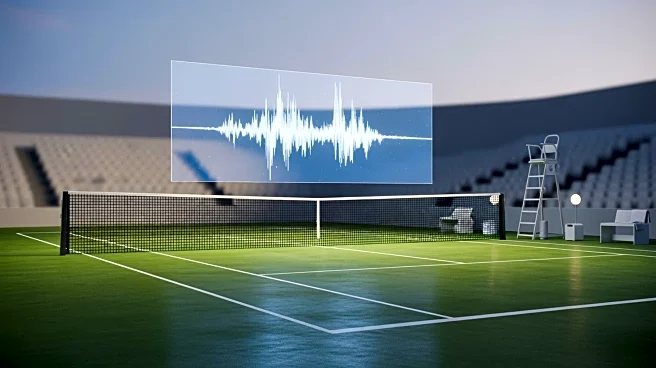
Wimbledon, the oldest Grand Slam tennis tournament, will implement video review technology for the first time at this year's event, as announced by the All England Club. This technology will be available on Centre Court, No. 1 Court, and four other show
courts. Players will have the opportunity to review specific calls made by the chair umpire, such as double bounces. This marks the technology's debut at Wimbledon, following its introduction at the 2023 U.S. Open and its use at the Australian Open. The video review is distinct from the electronic line-calling system, which was introduced last year to replace line judges. The tournament will also feature visual indicators on scoreboards for electronic line-calling, displaying 'out' and 'fault' calls.
Why It's Important?
The introduction of video review technology at Wimbledon represents a significant advancement in the sport, aiming to enhance the accuracy and fairness of officiating. This move aligns Wimbledon with other major tournaments that have adopted similar technologies, reflecting a broader trend in sports towards leveraging technology to improve decision-making. For players, this development offers a new level of transparency and the ability to challenge umpire decisions, potentially impacting match outcomes. The change may also influence the viewing experience for fans, providing clearer insights into contentious calls. As tennis continues to evolve, the integration of technology like video review could set new standards for the sport globally.
What's Next?
As Wimbledon prepares to implement video review technology, stakeholders will be closely monitoring its impact on the tournament. Players and coaches may need to adapt their strategies to incorporate the new review system effectively. The All England Club will likely gather feedback from participants and spectators to assess the technology's success and areas for improvement. Additionally, other tennis tournaments may consider adopting similar systems if Wimbledon's implementation proves successful. The broader sports community will be watching to see how this technological integration influences the dynamics of the game and whether it leads to further innovations in officiating.