


What's Happening?
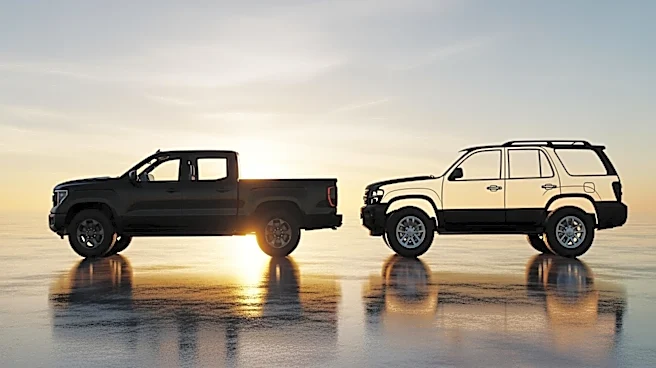
Nissan has announced a strategic shift in its production plans in the United States, opting to manufacture internal combustion engine (ICE) trucks and SUVs instead of electric vehicles (EVs) as initially planned. The company will produce the Xterra SUV and an updated
version of the Frontier pickup truck at its Mississippi factory. This decision marks a departure from Nissan's previous plan, which involved a $500 million investment to produce two EV models in the U.S. The change was communicated to suppliers via email, citing 'market conditions, customer demand, and Nissan’s updated strategic direction' as reasons for the shift.
Why It's Important?
Nissan's decision to focus on ICE vehicles rather than EVs in the U.S. could have significant implications for the automotive industry and environmental policy. This move contrasts with the global trend towards electrification and may impact the U.S. market's transition to sustainable transportation. The decision could affect Nissan's competitiveness in the growing EV market, where consumer demand and regulatory pressures are increasingly favoring electric options. Additionally, this shift may influence other automakers' strategies and the overall pace of EV adoption in the U.S., potentially slowing progress towards reducing carbon emissions in the transportation sector.
What's Next?
Nissan's decision may prompt reactions from various stakeholders, including environmental groups, policymakers, and competitors. The company may face scrutiny from those advocating for accelerated EV adoption and stricter emissions standards. Meanwhile, competitors focusing on EVs might capitalize on this opportunity to capture market share. Nissan will likely monitor market responses and adjust its strategy as needed, potentially revisiting its EV plans if consumer demand shifts or regulatory pressures increase. The broader industry will watch closely to see if other automakers follow suit or double down on electrification efforts.