




What's Happening?
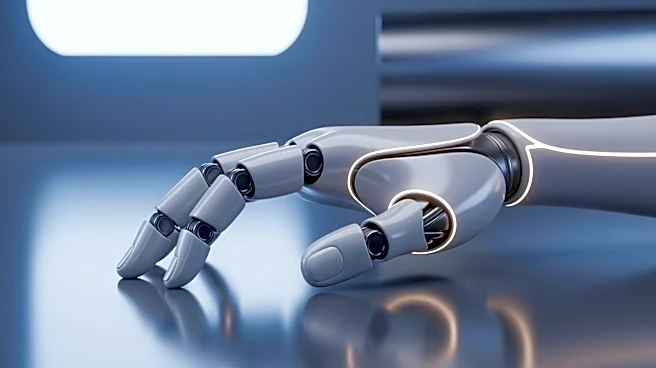
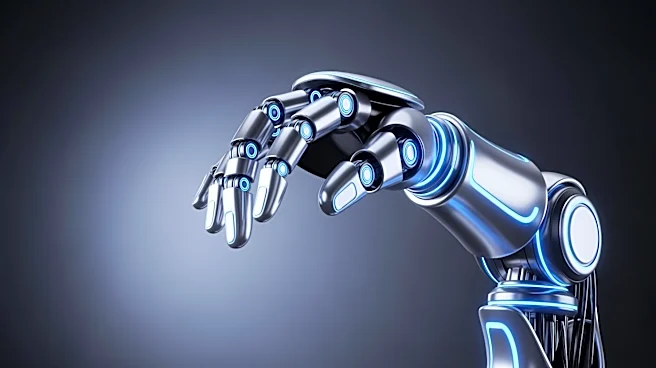
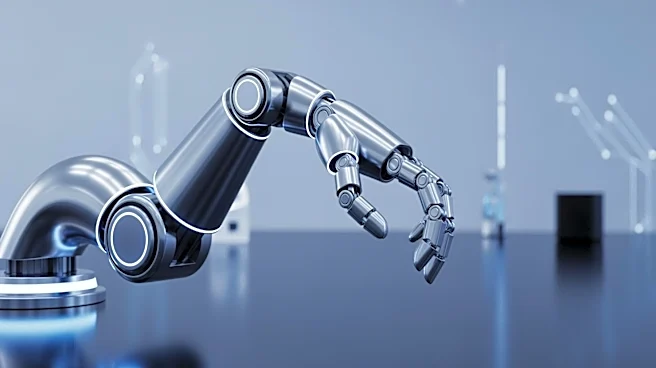
Genesis AI has introduced the GENE-26.5 model, designed to enhance robotic dexterity to human-like levels. This model is part of a broader system that includes a data engine and a human-scale robotic hand, enabling skill transfer from humans to robots.
The company claims this innovation overcomes data bottlenecks in robotics, paving the way for general-purpose robots capable of complex tasks. The GENE-26.5 model is built to absorb vast amounts of data, allowing robots to perform intricate tasks with precision. Genesis AI's approach includes using simulation to accelerate training, making development faster and more cost-effective.
Why It's Important?
The introduction of GENE-26.5 represents a significant advancement in robotics, potentially transforming industries reliant on manual labor. By enabling robots to perform tasks with human-like dexterity, businesses could see increased efficiency and reduced labor costs. This development may also spur innovation in sectors such as manufacturing, healthcare, and logistics, where precision and adaptability are crucial. The ability to train robots using simulation could lead to faster deployment and adaptation, offering a competitive edge to companies that adopt this technology.
What's Next?
Genesis AI plans to deploy its technology in real-world environments, potentially leading to widespread adoption across various industries. The company is engaging with partners to integrate its systems into existing workflows, which could result in the creation of a vast library of human skills for robotic training. As the technology matures, it may prompt discussions around the ethical implications of replacing human labor with robots, as well as the need for regulatory frameworks to ensure safe and responsible use of advanced robotics.