








What's Happening?
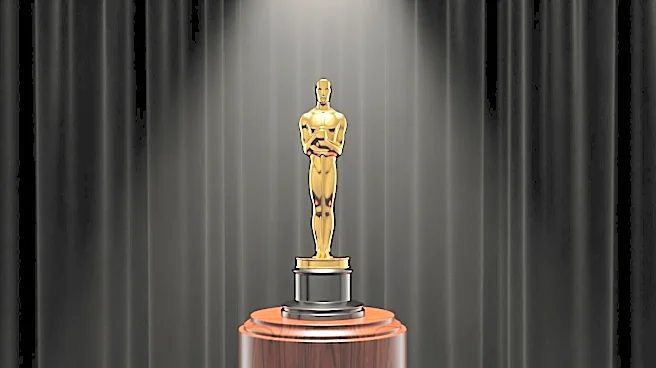
Oscar-winning actor Tom Hanks has expressed his opinion that voice actors do not need a separate category at the Oscars, as they can compete in existing acting categories. Hanks, known for voicing Woody in the 'Toy Story' series, argues that voice performances
can be as impactful as on-screen performances. He cited Andy Serkis, known for his roles in 'Lord of the Rings' and 'Planet of the Apes', as an example of a performer who could be recognized for his vocal work. Hanks' comments come as he reprises his role as Woody in 'Toy Story 5', set to premiere on June 19. The discussion around voice acting recognition at the Oscars has been ongoing, with the Academy having introduced the Best Animated Feature category in 2002, but no voice actor has won in the acting categories since the Oscars began in 1929.
Why It's Important?
Hanks' stance highlights a significant debate within the film industry regarding the recognition of voice actors. As animation and voice acting continue to grow in prominence, the question of how to appropriately honor these performances becomes more pressing. The inclusion of voice actors in existing categories could encourage a broader appreciation of their work and potentially lead to more diverse nominations. This could impact the careers of voice actors, providing them with greater visibility and opportunities. Additionally, it reflects the evolving nature of the film industry, where traditional boundaries between different types of performances are increasingly blurred.
What's Next?
The conversation around voice acting and its recognition at major award ceremonies like the Oscars is likely to continue. Industry stakeholders, including actors, directors, and producers, may push for changes in how performances are evaluated and awarded. The success of 'Toy Story 5' and other animated films could further influence this debate, especially if they feature standout vocal performances. The Academy may face pressure to reconsider its categories or criteria to better reflect the contributions of voice actors. This ongoing discussion could lead to changes in future award ceremonies, potentially setting new precedents for how performances are recognized.