





What's Happening?
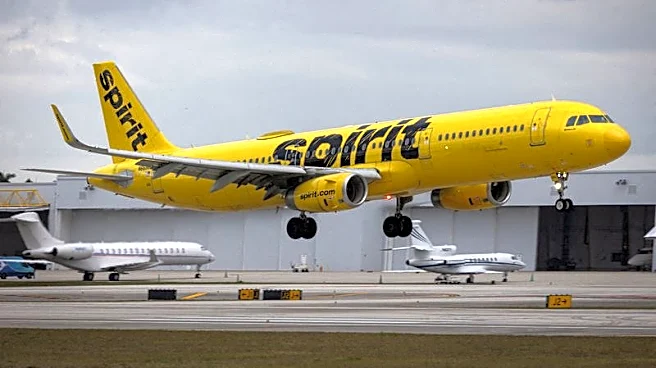
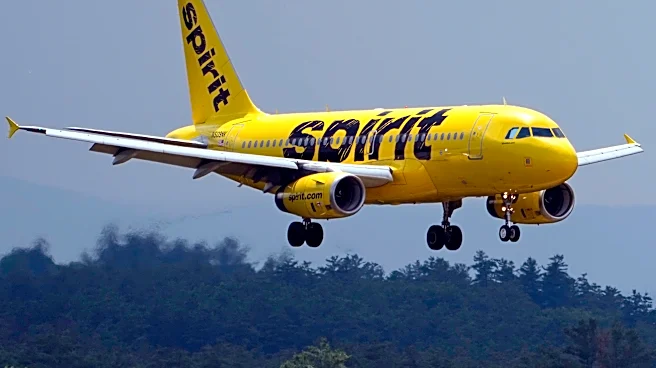
Spirit Airlines is set to cease all operations starting at 3 am ET on Saturday, marking the first major U.S. airline shutdown in nearly 25 years. The decision comes as the airline faces insurmountable financial challenges, exacerbated by soaring jet fuel
prices. Spirit had been in advanced discussions with the Trump administration for a potential rescue package, but negotiations fell through due to disagreements with key creditors. The creditors were reportedly opposed to a plan that would have given the government control over the majority of the airline's shares. This shutdown will affect approximately 9,000 flights scheduled for May, impacting around 1.8 million seats and leaving 17,000 employees jobless. The airline's financial woes have been ongoing, with Spirit filing for bankruptcy twice, most recently in August 2025.
Why It's Important?
The shutdown of Spirit Airlines is significant as it highlights the vulnerability of the airline industry to external economic pressures, such as fuel price volatility. This development is likely to lead to increased airfares across the U.S. as Spirit's low-cost model had previously driven competitive pricing. The cessation of Spirit's operations will also contribute to further consolidation in the airline industry, where a few major carriers already dominate. The loss of Spirit's flights, which accounted for 2% of domestic U.S. flights, will reduce competition and potentially lead to higher prices for consumers. Additionally, the failure to secure a government bailout reflects the complexities and challenges of government intervention in private sector financial crises.
What's Next?
Passengers holding Spirit tickets will need to seek refunds through their credit or debit card issuers, while those who paid in cash will become creditors in the bankruptcy process. The airline's shutdown will force passengers to find alternative travel arrangements, likely at higher costs due to last-minute booking rates. The broader airline industry may see a ripple effect, with other carriers potentially adjusting their pricing strategies in response to reduced competition. The situation also raises questions about the future of low-cost carriers in an environment of rising operational costs and economic uncertainty.