



What's Happening?
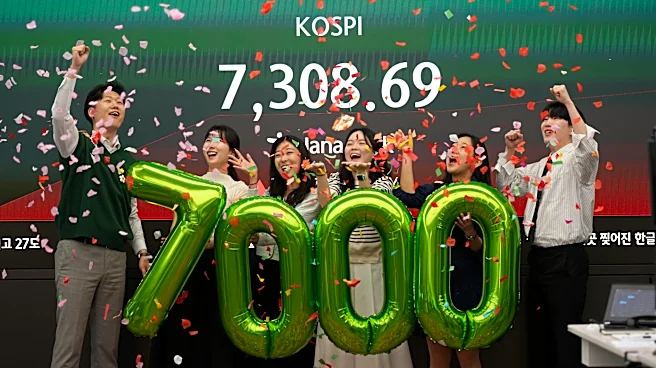
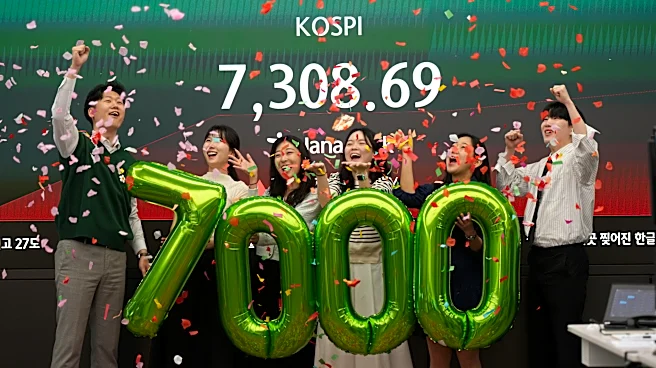
South Korea's Kospi index has recently surpassed Canada's market to become the world's seventh largest, driven by a significant increase in demand for semiconductor chips used in artificial intelligence. The Kospi has experienced a remarkable growth,
gaining nearly 76% in 2025 and continuing to rise by 75% in 2026. This surge has been largely attributed to the global AI boom, which has overshadowed some risks from the ongoing Iran war. Samsung Electronics, a major player in the semiconductor industry, has seen its market value exceed $1 trillion, marking it as the second Asian company to achieve this milestone after Taiwan Semiconductor Manufacturing Company.
Why It's Important?
The growth of South Korea's Kospi index highlights the critical role of semiconductor chips in the global economy, particularly in the context of artificial intelligence. This development underscores the strategic importance of the semiconductor industry, which is pivotal for technological advancements and economic growth. The AI-driven rally has provided a significant boost to markets in Asia, which are heavily reliant on semiconductor production. This trend also reflects the shifting dynamics in global markets, where regions with strong tech and AI sectors are experiencing substantial economic gains, while others, like Europe, lag behind due to less exposure to these industries.
What's Next?
As the demand for AI infrastructure continues to grow, South Korea's semiconductor industry is likely to see further expansion. This could lead to increased investments in technology and innovation, potentially positioning South Korea as a leading hub for AI development. Additionally, the ongoing geopolitical tensions, such as the Iran war, may continue to impact global oil supply, affecting economies reliant on oil imports. However, the focus on AI and technology may help mitigate some of these economic challenges, providing a buffer against external shocks.