




What's Happening?
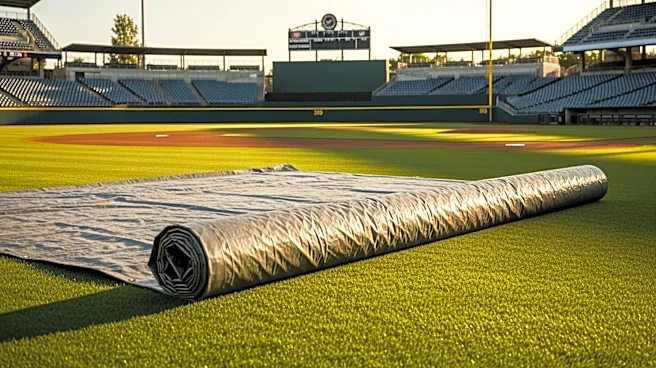
A new trend known as 'Tarps Off' is sweeping Major League Baseball (MLB) stadiums across the United States, characterized by fans, predominantly young men, removing their shirts and waving them in the air. This movement began in St. Louis when a group
of college baseball players attended a Cardinals game and initiated the shirtless celebration. The trend quickly spread to other cities, including Detroit, Tampa Bay, Philadelphia, Seattle, and Anaheim. The phenomenon has injected a lively, college-like atmosphere into the games, with fans engaging in soccer-style chants and songs. Cardinals manager Oliver Marmol and players have expressed appreciation for the increased energy, noting its positive impact on the team's performance. The Cardinals' mascot, Fredbird, has also participated in the festivities, further encouraging the fan engagement.
Why It's Important?
The 'Tarps Off' trend is significant as it represents a shift in the traditional baseball game atmosphere, potentially attracting a younger demographic to the sport. This increased fan engagement could lead to higher attendance rates, as evidenced by the current season's average attendance being approximately 1,000 more fans per game compared to the previous year. If the trend continues, MLB could see its highest average attendance since 2016. The lively atmosphere created by the shirtless fans not only enhances the game-day experience but also provides a home-field advantage for teams, as seen with the Cardinals' recent victories. This trend could influence how MLB markets its games and engages with fans in the future.
What's Next?
As the 'Tarps Off' trend continues to gain momentum, MLB teams may consider embracing and promoting this new fan culture to boost attendance and engagement. Teams might implement special promotions or themed nights to capitalize on the trend. Additionally, other sports leagues could observe and potentially adopt similar fan engagement strategies. The trend's impact on game attendance and team performance will likely be monitored closely by MLB executives and team managers. The continuation of this trend could lead to a reevaluation of fan interaction strategies across the league.