

What's Happening?
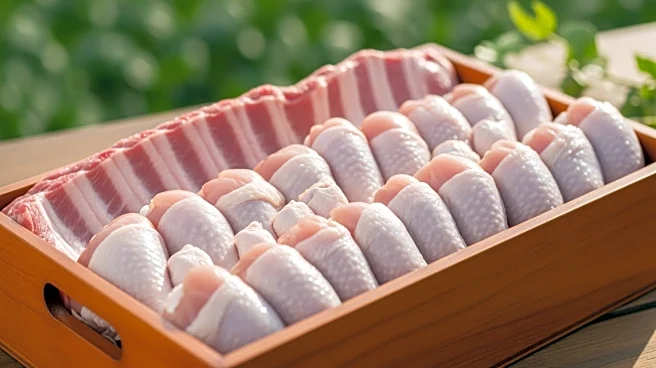
The United States Department of Agriculture (USDA) has announced the allocation of $212 million to support U.S. agricultural exports through its Foreign Market Development (FMD) Program and Market Access Program (MAP). These programs are designed to help U.S. producers maintain a competitive edge in the global market. This year, the USDA's Foreign Agricultural Service (FAS) will distribute over $31 million through the FMD program to 18 trade organizations and more than $181 million through MAP to 68 organizations and cooperatives. Notable recipients include the American Soybean Association, the U.S. Meat Export Federation, and the U.S. Grains & BioProducts Council. The funding aims to enhance the global demand for U.S. agricultural products,
including pork, beef, and lamb.
Why It's Important?
The USDA's funding is crucial for U.S. farmers and the agricultural sector, as it helps sustain and expand international market opportunities. By supporting these programs, the USDA is enabling American producers to compete globally, which is vital for the economic health of the U.S. agricultural industry. The funding also helps mitigate the impact of fluctuating global markets and trade barriers, ensuring that U.S. agricultural products remain competitive. This initiative is particularly significant as it aligns with broader efforts to bolster the U.S. economy by increasing exports and supporting domestic producers.
What's Next?
The USDA's continued support for export programs is expected to further strengthen the U.S. agricultural sector's global presence. As these programs develop, they may lead to increased market access and new trade partnerships. Stakeholders, including farmers and trade organizations, will likely monitor the effectiveness of these programs in expanding market opportunities and enhancing the competitiveness of U.S. agricultural products. The USDA's commitment to these initiatives suggests ongoing efforts to adapt to changing global trade dynamics and support the long-term sustainability of U.S. agriculture.