



What's Happening?
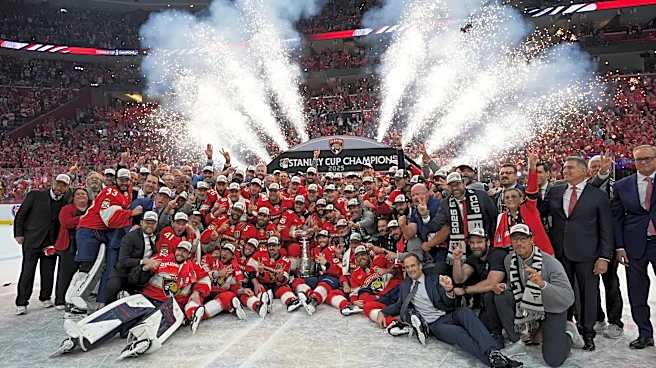
Phil Pritchard, known as the NHL's Keeper of the Stanley Cup, appeared on the NPR show 'Wait Wait... Don't Tell Me!' as the 'Not My Job' guest. During the episode, Pritchard was quizzed on topics related to National Historic Landmarks, diverging from
his usual hockey-related expertise. The show, recorded in Chicago, featured host Peter Sagal and panelists Alonzo Bodden, Adam Burke, and Dulcé Sloan. The episode included various segments such as 'Bluff The Listener,' where panelists shared stories about missed opportunities, and 'Lightning Fill In The Blank,' covering news that didn't fit elsewhere. The show also featured humorous limericks read by Alzo Slade, touching on topics like spring cleaning and unconventional food items.
Why It's Important?
The appearance of Phil Pritchard on 'Wait Wait... Don't Tell Me!' highlights the show's unique format, which blends humor with informative content. By featuring guests from diverse backgrounds, the program engages a wide audience and introduces them to topics they might not typically explore. Pritchard's participation underscores the show's ability to connect cultural and historical themes with popular figures, enhancing public interest in National Historic Landmarks. This approach not only entertains but also educates listeners, potentially increasing awareness and appreciation for historical sites across the United States.
What's Next?
Future episodes of 'Wait Wait... Don't Tell Me!' are likely to continue featuring guests from various fields, maintaining the show's tradition of mixing humor with education. The program's format encourages listeners to engage with topics outside their usual interests, fostering a broader understanding of cultural and historical issues. As the show progresses, it may explore new themes and invite guests who can offer fresh perspectives, further enriching the audience's experience.
Beyond the Headlines
The inclusion of National Historic Landmarks in a popular radio show like 'Wait Wait... Don't Tell Me!' can have lasting cultural impacts. By bringing attention to these sites, the program may inspire listeners to visit and support preservation efforts. This exposure can lead to increased tourism and funding for landmark maintenance, ensuring their survival for future generations. Additionally, the show's humorous approach to serious topics can make history more accessible and engaging, potentially sparking interest in historical education and conservation.